
Supreme Court changes the 3 years practice rule for the recruitment of Civil Judge
The Supreme Court of India has amended its earlier directive of three years of legal practice for the recruitment to the cadre of Civil Judge (Junior Division) in a big decision impacting thousands of law graduates and aspirants to become judicial officers. In its ruling on August 21, 2026, the Court affirmed the requirement for practical legal experience but shortened it from three to one year of active practice, and instituted a system of structured training and clerkship after selection.
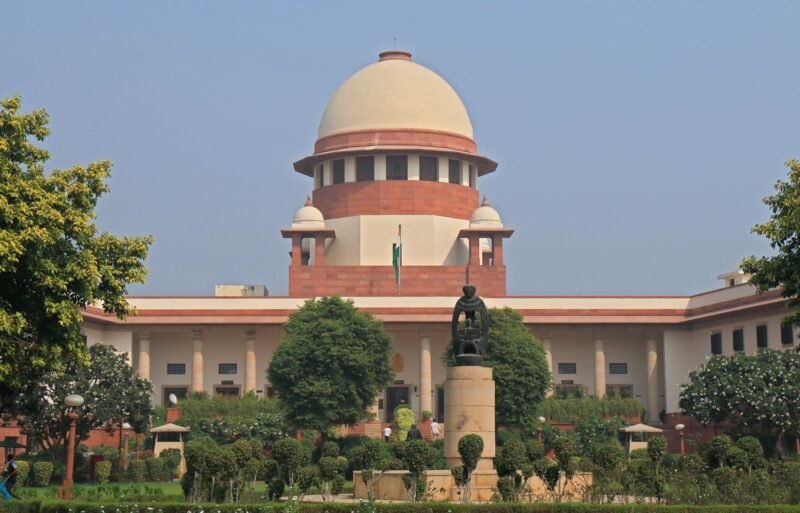
The Court referred to the review petitions filed against its earlier order in Bhumika Trust v. Union of India & Ors. and connected petitions, which had challenged its previous order lifting a three-year bar on direct recruitment of candidates as Civil Judges (Junior Division). The former provision had raised a lot of concern among the new entrants to the legal profession, especially as they were mandated to practice law for three years before sitting for the judicial service examinations.
Most of them, including Chief Justice of India Surya Kant and Justice Augustine George Masih, agreed that there was still a need for hands-on experience in the profession before becoming a judge. The Court however, appreciated that a three year provision could provide an unnecessary obstacle to the talents of graduates and deter candidates from entering judicial service straight out of legal education. Justice K. Vinod Chandran disagreed with the majority opinion.
The new arrangement ensures that those who are successful in the judicial service examination won’t take on independent judicial duties right away. Rather, they have to attend one year of intensive training at the State Judicial Academy and complete one year of structured law clerkship. The clerkship will be made up of six months under a District Judge or a member of the Higher Judicial Service and six months under a sitting High Court Judge. This system is a good alternative to part of the previous 3-year requirement of being supervised or institutionalized in the bar.
Importantly, the Court also struck a balance between the parties until March 31, 2027. In this period, law graduates will be exempted from the three-year requirement in producing a certificate of the three years of practice and will be allowed to take judicial service exams, which are relevant. The new rule of having one year of verified active legal practice will be applied for recruitment notifications issued from April 1, 2027.
The judgement is a major change in the discussion regarding the “best route” to lower court positions. Those who advocate for the mandatory practice have claimed that the judge should have a first-hand understanding of the procedure in courts, and litigation, evidence, lawyers, and practical challenges that litigants encounter. In a significant acceptance of this logic, the Court has rejected the entire removal of the requirement for prior legal experience.
The decision also recognizes the need of young lawyers to have a long compulsory period at the Bar, which can be financially and professionally challenging, especially for those who are not from well-connected families. The one-year requirement and intensive judicial training and supervised clerkship attends to a balance between accessibility and competence.
The decision also demonstrates that academic credentials are not the sole criteria for selecting judges. A Civil Judge deals directly with evidence, bail, civil disputes, criminal trials and procedural questions. Systematic exposure to the workings of the courts are thus indispensable. However, such exposure does not always have to be experienced from three years of independent legal practice.
The decision is clearly crucial for judiciary aspirants. It creates new opportunities for young graduates to enter the profession earlier and allows the successful ones to have a significant amount of on-the-job training before working alone in court. The Supreme Court therefore has veered away from the “three years at the Bar or nothing” system and adopted a more flexible structure of one year’s training and two years’ supervised work.
At the end of the day, the August 21 judgment is a compromise in order to arrive at two essential goals: to draw young, meritorious talent in to the judiciary and to ensure that the people who hold the judicial power are familiar with the day-to-day functioning of the justice system. The implementation of training and clerkship by State Judicial Academies or High Courts will be a key factor in the success of this new model.