
Re-Arrest After an Illegal Arrest
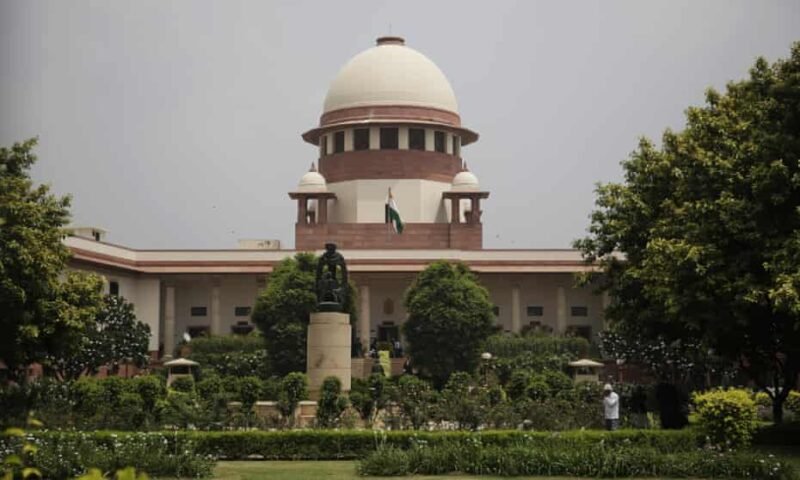
Supreme Court Strengthens Article 22 Safeguards The Supreme Court of India has recently delivered an important judgment strengthening constitutional protection against unlawful arrest and arbitrary deprivation of personal liberty. In Jaskaran Jeet Singh Deol v. State of Punjab, 2026 INSC 1022, a Bench comprising Justice Ujjal Bhuyan and Justice Atul S. Chandurkar examined whether a person whose arrest was declared unconstitutional could subsequently be re-arrested for the same offence.
At the heart of the judgment is Article 22 of the Constitution, which protects persons against arbitrary arrest and detention. Article 22(1) requires an arrested person to be informed, as soon as possible, of the grounds of arrest and protects the right to consult and be defended by a legal practitioner. Article 22(2) further requires an arrested person to be produced before the nearest Magistrate within 24 hours of arrest, excluding the time necessary for the journey. These safeguards are closely connected with the constitutional protection of personal liberty under Article 21.
The case arose after the appellant was arrested in Punjab in connection with serious allegations involving offences under the Bharatiya Nyaya Sanhita, 2023 and the Protection of Children from Sexual Offences Act, 2012. Although he was produced before a Magistrate, the investigating agency had not furnished him with written grounds of arrest. The Magistrate consequently treated the arrest as illegal and ordered his release. The question then arose: could the investigating agency simply arrest him again?
The Supreme Court answered this question by introducing an important judicial safeguard. It held that release following an unconstitutional arrest is not equivalent to release on bail. The person is released because the detention itself was illegal. Therefore, the investigating agency cannot simply treat the earlier illegality as a technical defect and re-arrest the individual on its own authority.
The Court prescribed a specific procedure for any proposed re-arrest. First, the investigating agency must furnish the written grounds of arrest. It must then approach the concerned Magistrate with an application explaining the necessity for custody and the reasons for the earlier failure to comply with Article 22. The application must also carry the endorsement of the immediate superior officer. The Magistrate must independently examine the request before permitting re-arrest.
The Court also reaffirmed that the 24-hour production requirement under Article 22(2) is mandatory. Detention beyond this constitutional limit without production before a Magistrate can render the detention unconstitutional. Similarly, subsequent filing of a charge-sheet or taking of cognizance cannot retrospectively validate an arrest that was unconstitutional from the beginning.
This decision therefore places judicial supervision between an investigating agency and the liberty of a person whose constitutional rights have already been violated. It does not create permanent immunity from arrest; rather, it ensures that the power of re-arrest is not exercised casually or by the same authority that failed to respect constitutional safeguards in the first instance.
The judgment reinforces a fundamental principle of criminal procedure: constitutional safeguards are not merely technical formalities. The State’s power to investigate crime must operate within the boundaries established by the Constitution. By requiring judicial scrutiny before re-arrest following an illegal arrest, the Supreme Court has further strengthened the relationship between Article 21, Article 22 and the rule of law.
For legal practitioners and students, the ruling is significant because it demonstrates that an illegal arrest cannot simply be cured through subsequent procedural steps. Personal liberty remains constitutionally protected at every stage of the criminal process, including when the State seeks to place a person in custody.