
The Legal Status of Digital Twins: Can a Virtual Replica Have Legal Consequences?
The instant growth of artificial intelligence, the Internet of Things and immersive technologies has created a new idea known as the “digital twin”—a virtual representation of a real-world person, object, system or environment. Originally developed for engineering and industrial applications, digital twins are now increasingly being explored for healthcare, education, employment, entertainment and personal digital identity. This development raises an unusual but important legal question: can a virtual replica of a person or object itself acquire legal importance or produce legal consequences?
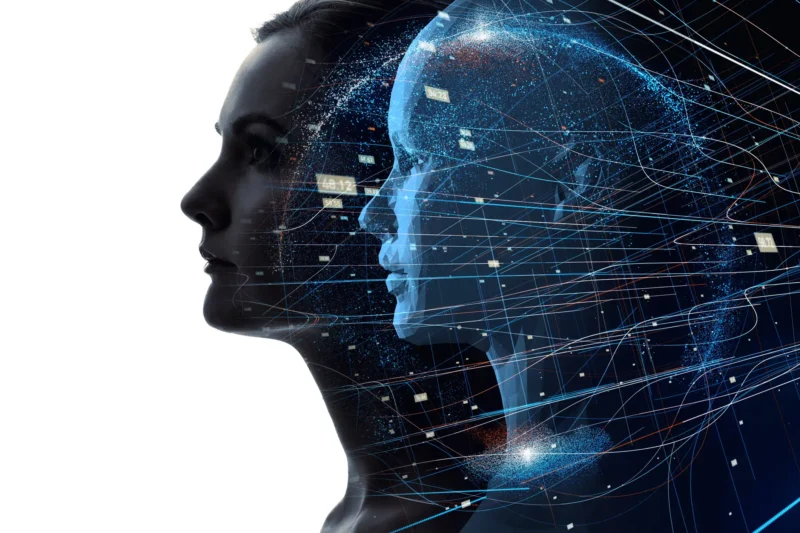
A digital twin is not only a photograph or digital profile. It can be a dynamic model that continuously incorporates information about its real-world counterpart. In the case of a person, it could potentially reproduce aspects of an individual’s appearance, voice, behaviour, preferences, movements and decision-making patterns. As technology advances, distinguishing between a real person and an increasingly sophisticated digital replica may become difficult.
Indian law does not currently recognise a digital twin as an independent legal person. Legal personality is generally associated with human beings and, in specific circumstances, juristic entities such as companies and institutions. Therefore, a digital replica cannot ordinarily own property, enter contracts, incur criminal liability or independently exercise fundamental rights. However, this does not mean that actions involving a digital twin are legally irrelevant.
The first major issue is secrecy. A digital twin may be constructed using enormous quantities of personal information, including biometric data, photographs, behavioural patterns and location information. Article 21 of the Constitution protects the right to privacy, while the Supreme Court’s decision in K.S. Puttaswamy v. Union of India recognised privacy as a fundamental right. The creation or use of a highly detailed digital replica without meaningful consent could therefore raise serious constitutional and statutory concerns.
The second issue deals personality and intellectual property rights. A person’s face, voice, name and distinctive characteristics may have commercial value. If a company creates a virtual version of an actor, athlete or public figure and uses it for advertising without authorisation, questions of personality rights, passing off and copyright may arise. The increasing use of generative AI makes this problem even more complicated because replicas can be made without the individual’s direct participation.
A further challenge is liability. Suppose a digital twin is used to make a fraudulent statement, sign a transaction or manipulate another person’s identity. Who should be responsible: the person whose identity was replicated, the developer who created the system, the platform that hosted it, or the person who misused it? Existing criminal and civil laws may deal with particular acts, but they were not designed specifically for autonomous digital replicas.
Digital twins could also create problems in evidence law. If a digital replica can imitate a person’s voice, appearance or behaviour with near-perfect accuracy, courts may increasingly have to question whether digital material genuinely represents the real person. Authentication and reliability will become crucial, particularly in criminal trials.
The future therefore requires a careful distinction between giving legal personality to digital twins and regulating their legal effects. India may not need to treat digital replicas as “persons,” but it may need clearer rules concerning consent, ownership, authentication, liability and misuse.
Ultimately, the digital twin represents a fascinating shift in the relationship between humans and technology. The law need not give a virtual replica independent legal rights to recognise that actions involving it can affect real human rights and responsibilities. As virtual identities become increasingly realistic, the central legal question may no longer be whether a digital twin is a person, but who should bear responsibility when the virtual representation of a person acts in the real world?