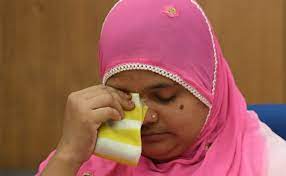
Delhi High Court clarified that sex with a minor wife is not covered under the Muslim Personal Law Immunity From POCSO
Delhi High Court has ruled that a marriage that is registered as valid under the Muslim personal law does not grant immunity to anyone from prosecution under the Protection of Children from Sexual Offences Act, 2012 (POCSO) or the Bharatiya Nyaya Sanhita, 2023 (BNS) if the wife was a minor when the sexual intercourse took place.
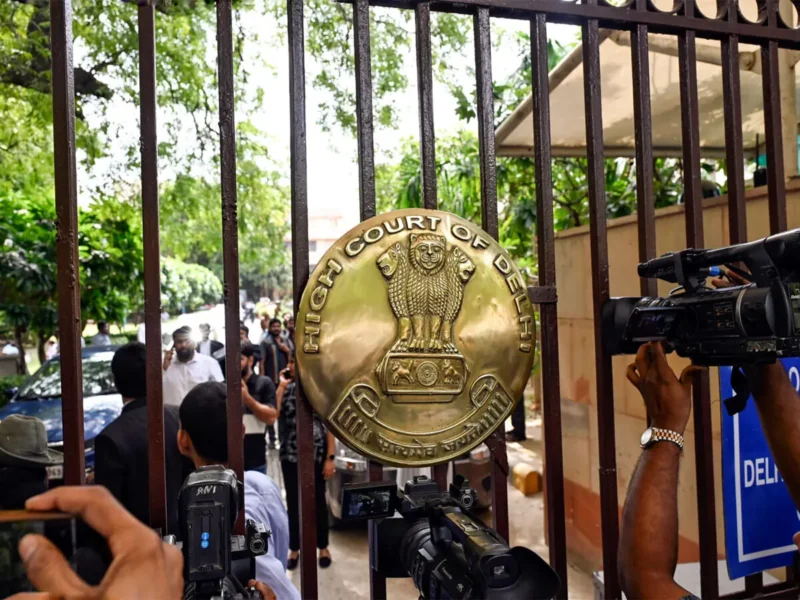
Justice Sanjeev Narula made the observation in dismissing a petition filed for quashing of an FIR registered under Section 64(1) of the BNS and Section 6 of the POCSO Act against a man. The Court clarified that it was not making a finding of guilt but merely considering the question of quashing the FIR.
Upon marriage, the woman was 16 years and three months old, and the man was almost 28. Then they lived together and the woman conceived. She was discovered as a teenager when she went to a government hospital during her pregnancy.
The woman repeatedly said there had been no force, coercion or pressure and the couple had married of their own volition with the consent of both families. She additionally aided the man in his plea for setting aside the FIR.
The petitioners contended that according to Muslim personal law, a Muslim girl, once she reaches puberty, can marry. They argued that if the marriage was legally recognised, the sexual relationship between the parties of the marriage cannot find criminal responsibility.
The High Court did not agree with this line of thought. Since POCSO defines a child as a person under 18 years, and it criminalises penetrative sexual assault against a child, even when it occurs without consent, this provision highlights the issue.The provision reflects this as POCSO defines a child as a person under 18 years and it criminalises penetrative sexual assault against a child even in the absence of consent. Section 42-A also provides for the overriding nature of POCSO in case of any conflict with any other law.
The Court also cited to Section 63 of the BNS which deemed sexual intercourse with a girl aged less than 18 as rape without the girl’s consent. Note that an exception for marriage is provided under Section 63, but only when the wife is not less than 18 years old.
The Court therefore made a distinction between the validity or consequences of a marriage under personal law and the independent criminal consequences of sexual intercourse with a child.
In Independent Thought v. Union of India, the Supreme Court had not only determined that sexual intercourse by a husband with his wife below 18 years is not beyond the ambit of criminal law, but had also provided a concise definition of rape.The judgment had drawn heavily from the previous Supreme Court precedent of Independent Thought v. Union of India, which had held that sexual intercourse by a husband with his wife below 18 years is within the ambit of criminal law and had also provided a rather succinct definition of rape.
The Court also noted the Supreme Court judgment in Society for Enlightenment and Voluntary Action v. Union of India, 2024, which held that POCSO applies to individuals under the age of 18, and that sexual intercourse with a minor wife may be covered under the Act.
The High Court also took note of cases cited by the petitioners which included Gulam Deen and Javed. It said that the Supreme Court’s rejection of challenges in those cases was on the issue of locus and not affirmation under Article 141 of the Muslim personal law being supreme over POCSO.
One of the key issues in the judgment is the Court’s discussion of consent. The Bench noted that the woman always said the relationship was consensual. But it said that Parliament’s setting of 18 years as the appropriate age cannot be an exception to POCSO.The Court highlighted that marriage does not push a child’s age up. That there is a distinction between personal liberty and religious freedom in Article 21, Article 25, and the existence of a criminal statute which can be generally applied which is aimed to protect children cannot create an exception to it.
The judgment is a clear statement of the distinction between civil and criminal law. The Court did not finally rule the validity, voidness or voidability of the marriage itself. Its narrower holding was that even if the marriage is recognised as valid under Muslim personal law, sexual intercourse with a wife less than 18 years of age is not protected from POCSO/BNS.
The ruling thus strengthens the rule in the statute that the child protection legislation is based on the age fixed by Parliament and not on the age at which the personal law may recognize the capacity to marry. Simultaneously, the Court reiterated that the observations are not considered as a finding of guilt for the accused, which is to be decided on evidence by the trial court.