
Madras High Court Allows Temporary Government Jobs for Karur Stampede Victims’ Families: Balancing Compassion with Constitutional Equality
The Madras High Court’s recent ruling in favour of the families of the victims of the 2025 stampede in the city of Karur to issue appointment orders to them by the Tamil Nadu Government, with a clear indication that such appointments would be temporary and subject to court review, has brought the constitutional issue of compassionate public appointment once again. Instead of giving an unconditional approval, the Court took a more conservative stance and granted immediate relief, while reserving the right to review the appointment’s legality.
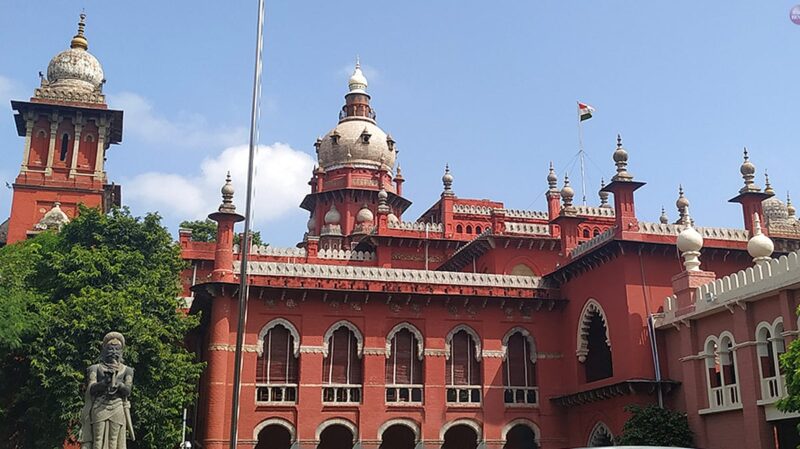
One of the worst crowd disasters of recent years was the stampede that took place on the occasion of a political event in the city of Karur, killing 41 people. After the tragedy, the State declared that each of the affected families will be provided with one government post as a part of the rehabilitation package. This decision was attacked in the Madras High Court on the fact that the inclusion of a public service in the list should be done according to a statutory policy, and not on the executive generosity. The petitioner submitted that the proposal was a denial of the right to equal opportunity guaranteed under Article 14 of the Constitution and denied the petitioner equality of opportunity in public employment as guaranteed by Article 16 of the Constitution.
The High Court, however, refused to have the government’s rehabilitation programme cut short. Rather, it allowed the orders of appointment to be made and ordered that the appointments would be “temporary,” depending on the results of the proceedings. This method tries to strike a balance between humanitarian considerations and constitutional protection.
The political issue from a constitutional point of view is whether there can be a public job for those who have suffered from a public tragedy. The Supreme Court has repeatedly ruled that appointments on compassionate grounds are an exception to the usual way of appointments, and must be strictly interpreted. In Umesh Kumar Nagpal and State of Haryana v State of Karnataka, the Court pointed out that public employment must be filled up through an open competition; it cannot become a medium of distributing largesse of the State.
The challenge is even greater due to the fact that these appointments are not ‘compassionate’ as they are made on the death of a government servant. Rather than that they come from the disaster of the public and the private individual. The absence of any common statutory policy to all similar tragedies would result in arbitrary classifications in government employment, which may not be able to meet the test of Article 14 and 16. No constitutional right of every eligible citizen to compete for public jobs can be taken lightly.Meanwhile, the State’s duty under Article 21 is not just to investigate disasters, but to provide substantive support for victims’ families’ rehabilitation. A financial restitution is not sufficient in itself for families who have lost the family breadwinners for good. Government jobs can offer financial stability and social security, particularly when the tragedy was blamed on the crowd management and public administration failures.
The High Court’s demand for the temporary appointments is an example of judicial restraint. The Court did not definitively rule in favor of the government’s policy, but held it up for future consideration and postponed any hardship to the bereaved families. This is also a temporary solution to avoid the devastating impact of unconstitutional appointments in the future.However, the lawsuit reveals a bigger policy hole. India does not have a comprehensive legal framework laying down the rules for rehabilitation in the form of public employment in mass disasters. The decisions remain arbitrary, leading to unequal standards and concerns about political favouritism. A clear and clear statutory policy that sets out objective conditions, restrictions and protections would serve to balance humanitarian needs and constitutional equality better.
The Madras High Court’s interim order, therefore, is not an approval nor a rejection of the government’s decision. Instead, it underscores the judiciary’s attempt to strike a delicate balance between compassion for victims and fidelity to constitutional principles. The ultimate result of the case will likely impact the future trajectory of disaster rehabilitation, discretion of the executive, and equality in public service.