
Public Space for Dissent Shrinking in India, Students Being Arrested for Protests: Justice Ujjal Bhuyan
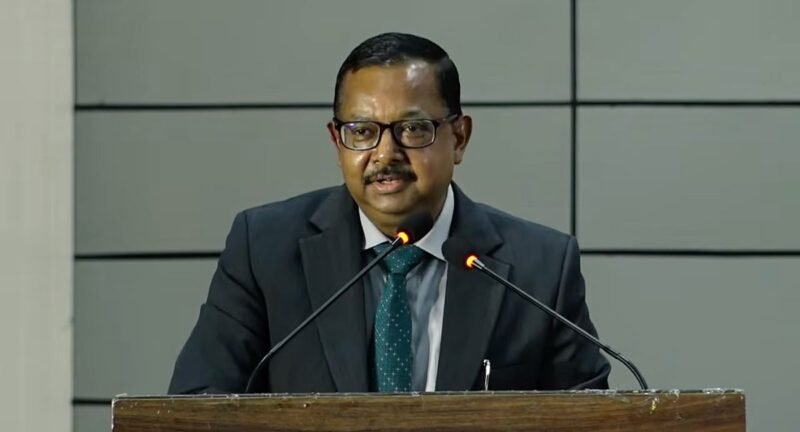
Recently Justice Ujjal Bhuyan of Supreme Court expressed concern about curbing the dissent in India, stating that students were increasingly getting arrested for taking part in protest. His words have sparked a constitutional debate about the need to safeguard democratic freedoms, including free speech and peaceful assembly. In a society where many public protests are met with criminal charges, these statements highlight the judiciary’s role in upholding constitutional ideals.
Dissent is considered as a vital aspect of democracy in the Indian Constitution. The right to freedom of speech and expression is guaranteed by Article 19(1)(a) and the right to assembly without arms is guaranteed by 19(1)(b). These rights include the ability of citizens, including students, to challenge government policies, hold government accountable and engage in public debate. In the name of public order, sovereignty and security of the State, the two articles listed above allow reasonable restrictions, however these restrictions cannot be such that they destroy the essence of these fundamental freedoms.
Students have been a force of change in India’s democratic struggle in the past. Students have contributed to the development of public policy and the constitutional process from the freedom movement to the JP Movement and other social justice movements. The criminalization of peaceful student protests thus poses serious concerns about the right to participatory democracy guaranteed by the Constitution.
Peaceful protest has been a constant theme of the Supreme Court. The Court in Mazdoor Kisan Shakti Sangathan v Union of India (2018) defined the right to peaceful protest as a constitutional right and, at the same time, stated that there is a need to balance the rights of protesters with the rights of others. In Amit Sahni v. Commissioner of Police (2020) – popularly called the Shaheen Bagh case – the Court has highlighted that the right to dissent is part and parcel of the democracy but the public space cannot be occupied for as long as it is possible without infringing on the rights of other citizens. These decisions are an example of how the judiciary aims to balance the protection of public order with the protection of constitutional freedoms, but not to eliminate dissent entirely.
The observations by Justice Bhuyan also find resonance in the landmark judgment of the Supreme Court in Kedar Nath Singh vs. State of Bihar (1962) which had explained that criticism of the Government does not constitute sedition unless it leads to violence or disorder. In a more recent case, in Shreya Singhal v. Union of India (2015), the Court again struck down a section of the Information Technology Act, holding that the expression of unpopular or critical opinions cannot be outlawed. The combination of these judgments reaffirms the constitutional principle that it is not illegal to disagree with the government.
The growing prevalence of the use of preventive detention laws, criminal charges and police action against student protesters has attracted the criticism of civil society and constitutional experts. The State has a legitimate interest in maintaining law and order but the indiscriminate use of criminal law against peaceful demonstrators may have a chilling effect on freedom of expression. These practices can make people reluctant to participate in the democratic process and may create a disincentive to give effect to their constitutional rights.
The remarks of Justice Bhuyan are apt to remind us that a healthy democracy is characterized by dialogue, criticism and peaceful disagreement. The university is a place of ideas, of political activity, and, students shouldn’t be afraid of criminal punishment, just for expressing dissent within the limits of the constitution. The key takeaway from this is that a constitutional democratic state should differentiate between peaceful protest and illegal violence.
In an era of intricate political and social issues as India continues to grapple with them, the right to dissent is essential. There is no greater sign of a democracy than its ability to stand criticism, yet accept various tones of voice. Justice Bhuyan’s remarks again emphasize that the right to peaceful dissent is not only a constitutional requirement, it is a democratic imperative, and its core to uphold the rule of law.