
AI as a Judge: Can Artificial Intelligence Replace Judicial Reasoning?
Artificial Intelligence (AI) is rapidly transforming industries across the globe, and the legal sector is no exception. From legal research and contract analysis to predictive analytics, AI-powered instruments are becoming a coral part of modern legal practice. As these technologies become more sophisticated, a compelling question emerges: Can Artificial Intelligence replace judicial reasoning?
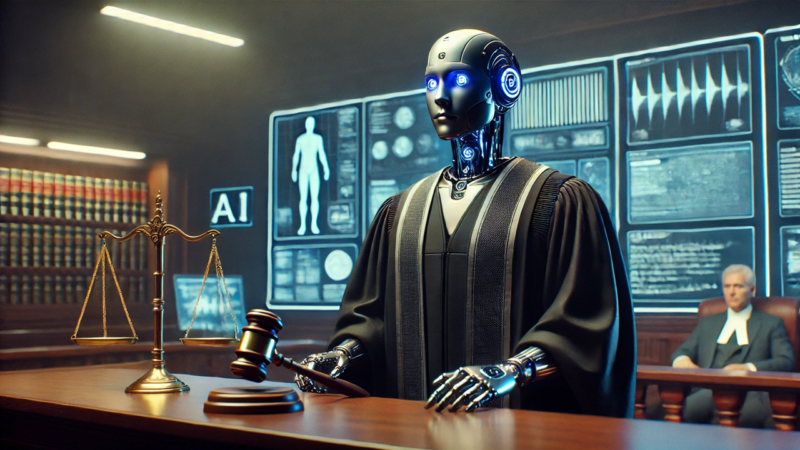
The answer is both fascinating and difficult. While AI has the capability to enhance the efficiency of judicial systems, replacing the human judge remains an issue that extends beyond technology.
Judicial reasoning is not only the application of statutes to facts. It involves interpreting laws, understanding legislative intent, evaluating evidence, assessing witness credibility, balancing competing interests, and ensuring that justice is delivered in accordance with constitutional values. These responsibilities need more than computational power they demand wisdom, empathy, and ethical judgment.
Artificial Intelligence excels at processing enormous volumes of legal data within seconds. It can identify relevant precedents, analyse patterns in previous judgments, detect inconsistencies, and even predict possible case outcomes based on historical data. Such capabilities significantly decrease the time spent on legal research and administrative tasks, allowing judges and lawyers to focus on more substantive legal issues.
Several countries have already integrated AI into their judicial systems in limited capacities. AI assists courts in case management, document review, scheduling, and legal research. These applications improve efficiency, reduce delays, and help tackle the growing backlog of cases. However, these systems function as decision-support tools rather than decision-makers.
Despite its advantages, AI has significant limitations. Judicial decisions often involve moral dilemmas, evolving social values, and unique factual circumstances that cannot always be captured through algorithms. Human judges rely on intuition, compassion, and life experience when deciding sensitive matters such as child custody, criminal sentencing, constitutional rights, and public interest litigation. These human qualities remain beyond the reach of artificial intelligence.
Another major concern is algorithmic bias. AI systems learn from historical data, which may itself reflect societal prejudices or discriminatory practices. If biased data is used to train AI, the resulting decisions may unintentionally perpetuate injustice rather than eliminate it. Ensuring transparency, accountability, and fairness in AI-driven legal systems therefore becomes a relevant legal and ethical challenge.
The Indian judiciary has adopted a cautious yet progressive approach toward AI. Initiatives such as AI-assisted legal research, language translation, and transcription services demonstrate the judiciary’s willingness to embrace technology while preserving judicial independence. Courts have consistently recognised that technology should assist judges, not replace them. Ultimately, the responsibility for delivering justice must remain with accountable human decision-makers.
The constitutional principle of natural justice also reinforces the need for human involvement in adjudication. Litigants expect not only a legally correct decision but also an opportunity to be heard by an impartial and empathetic authority. Public confidence in the justice delivery system depends on transparency, accountability, and human responsibility qualities that cannot be delegated entirely to machines.
The future of AI in the judiciary is therefore collaborative rather than substitutive. AI can serve as a powerful assistant by improving legal research, reducing procedural delays, and supporting informed decision-making. However, the final exercise of judicial discretion must remain with judges who can appreciate the human dimensions of every dispute.
Artificial Intelligence is undoubtedly reshaping the legal landscape, but justice is ultimately a human endeavour. The courtroom is not merely a place where laws are applied; it is where fairness, compassion, and constitutional values converge. AI may become an indispensable judicial assistant, but the role of the judge guided by reason, ethics, and humanity remains irreplaceable.