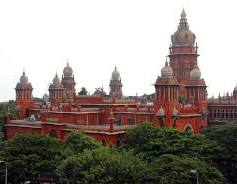

Madras High Court Petition Seeking FIR Against CM Vijay Withdrawn: Understanding the Legal Significance
A recent development, heard before the Madras High court, garnered a lot of publicity as the petitioner withdrew his petition asking for criminal proceedings and FIR. The allegations had to do with suppression of income, unaccounted cash transactions and possible money laundering but the case didn’t go to trial on merits as petitioner appeared to be uninterested in continuing with the case after elections.
The petition was filed by Chennai resident M. Rajkumar who had asked the Income Tax Department to look into documents collected during the previous search and assessment activities against Vijay. The plea also sought that the prosecution be initiated under the provision of the Income Tax Act, 1961, including Section 276C, which relates to wilful attempts to evade tax. Also, the petitioner had filed an FIR against the accused in the police station for an offence of cheating, forgery, use of forged document, criminal conspiracy etc. The petition also urged the material be sent to the Enforcement Directorate for appropriate action under the Prevention of Money Laundering Act (PMLA).
Interestingly, the issue had earlier given rise to an important procedural issue. The petition was initially refused numbering by the High Court Registry on the ground of maintainability. In this regard a Division Bench led by the Chief Justice explained that the determination of maintainability is a judicial process and not an administrative process. The Court ordered the Registry to register the matter and send it before the proper Bench with the endorsement ‘subject to maintainability’. This was an important principle of judicial administration, that access to the court ought not to be denied because a petition might be deemed to be legally underwhelming.
Finally, when the matter was called the petitioner told the Court that “after the elections he had renounced the case. Hence, the High Court allowed withdrawal of the petition and recorded the petition as withdrawn. The Court found no fault with Vijay, and did not hear the merits of the allegations.
Legally, the pull-out comes in two regards. In the first place, it shows the extent of PILs if the petitioner is not willing to push the case. Typically, courts do not engage in general searches without a “litigant” and evidence of that. Second, it could generate doubts about the timing and the potential goal of politically charged litigation. If serious allegations come to constitutional courts in the case of public figures, then their credibility will be enhanced if they are followed with consistency and are backed by a substantial material.
It is also crucial to note however that the withdrawal of the petition does not constitute judicial exoneration of the allegations nor does it provide any basis for wrongdoing. It does not mean that the Court did not consider the merits as the petitioner opted out of the proceedings. Any action which may be taken in the future would rely on independent and statutory bodies within their jurisdiction.
In conclusion, the case has highlighted that courts should be accessible to all who have grievances against even the highest public officials, but legal actions should be taken seriously, consistently and with supporting evidence. The manner in which the Madras High Court dealt with the issue also ensured the maintenance of fairness of the process as it did not involve screening of issues by administrative officers but by the Courts.