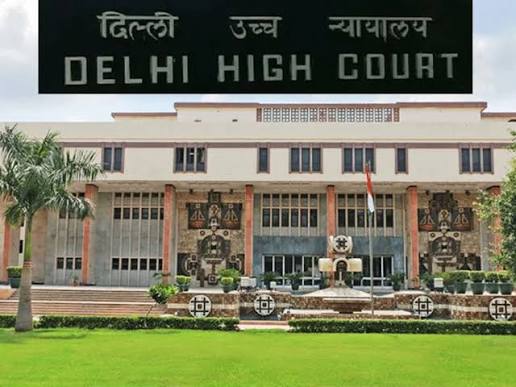
Why the celebrities are heading to Delhi High Court for safeguarding their personality rights?
Delhi High Court has emerged as an ideal forum for celebrities to approach and get their names, photograph, voice etc. identified as their unique features, protected from unauthorized use in recent years. All the stars from Amitabh Bachchan and Anil Kapoor to Aishwarya Rai Bachchan, Abhishek Bachchan and Karan Johar have turned to the Court to save their identity from being commercialized, misused for fake endorsements and AI-generated deepfakes.
The rise of the trend is not only about maintaining celebrity status, but also becoming more relevant in the digital economy. Thanks to artificial intelligence and social media, someone’s face and voice can be copied, altered and utilized to produce misleading publicizing, obscene substance, and bogus video recordings in only a couple of moments.
But why Delhi High Court?
It is, among other things, because of its jurisprudence in IP and Personality Rights. In the case of ICC Development (International) Ltd. v. Arvee Enterprises (2003), the Delhi High Court held that publicity rights are rights of the individual and cannot be enjoyed by an unrelated commercial entity. Likewise, in Anil Kapoor v. Simply Life India (2023), the Court issued protection against the unauthorised use of the actor’s name, image, voice, and other personality traits, such as through AI.
In the case of Amitabh Bachchan vs Rajat Nagi (2022), the Court has also shown a leaning towards safeguarding the identity of a celebrity, in the context of its rights being infringed by the unauthorized commercial use. Precedents have led to a well-established legal environment that motivates other public representatives to request the same remedies.
Another crucial factor is the character of digital piracy. Fakes, impersonation and unauthorized products are commonly traded via websites and social media that can be accessed worldwide. The Delhi High Court has accumulated a wealth of experience in granting urgent injunctions, mandating takedown of content on the internet and intermediary platforms. It is an attractive forum for such disputes, but it is not the only High Court that can give protection because of its jurisdiction and established procedures.
However, India still does not have any specific legislation which covers personality rights in full. Article 21 of the Constitution, the principles of IP rights, and passing-off remedies and privacy jurisprudence are the major tools used by courts. The Supreme Court in R. Rajagopal v. State of Tamil Nadu (1994) has identified certain aspects of the right to privacy of a person.
Also, it is essential that celebrity protection doesn’t be used to deter fair criticism, parody, satire, journalism or artistic expression. Not everything that involves a public figure’s name or image is his or hers.
The rise in number of cases before the Delhi High Court is a true reflection of a legal battle of this digital era. Judicial protection is essential, but India needs a definite legislative framework which will strike a balance between an individual’s right to control commercial exploitation of his or her identity and the freedom of speech and expression.