
Police Brutality – Aggressive Overuse of Power
Police officers are equipped with one of the most significant duties in society: maintaining law and order while safeguarding the rights and liberty of citizens. Their authority is derived from the law and is expected to be exercised with fairness, restraint, and accountability. However, when this authority is wasted through excessive force, unlawful detention, torture, or intimidation, it results in what is commonly known as police brutality. Such actions not only violate basic human rights but also erode public confidence in the justice system.
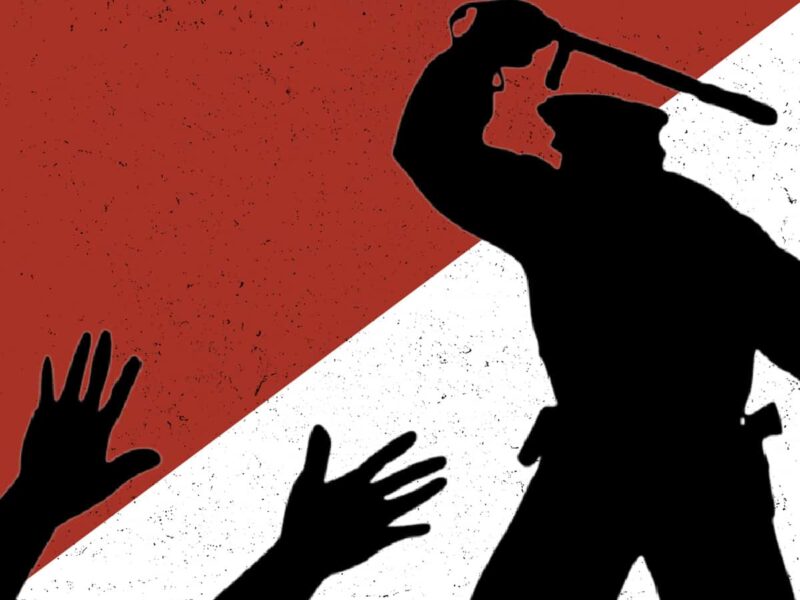
Police brutality refers to the aggressive and unnecessary use of force by law enforcement officials against individuals. While police may use reasonable force in situations involving self-defense or public safety, any force that crosses legal necessity becomes unlawful. Incidents involving custodial violence, fake encounters, coercive interrogations, and excessive force during protests have continuously highlighted the threats of unchecked police power. These acts often leave victims with physical injuries, psychological trauma, and, in extreme cases, the loss of life.
In India, the Constitution guarantees every individual the Right to Life and Personal Liberty under Article 21, ensuring that no person shall be deprived of these rights except according to the procedure established by law. Similarly, Article 14 guarantees equality before the law, while Article 22 provides safeguards against arbitrary arrest and detention. Police brutality directly weakens these constitutional safeties and threatens the rule of law.
The judiciary has consistently condemned custodial violence and misuse of police powers. In D.K. Basu v. State of West Bengal (1997), the Supreme Court laid down comprehensive guidelines regarding arrests and detention to prevent custodial torture and abuse. Likewise, in Joginder Kumar v. State of Uttar Pradesh (1994), the Court stressed that an arrest should not be made only because it is lawful but only when it is necessary and justified. These landmark judgments reinforce the principle that police authority must always operate within constitutional limits.
Several factors contribute to police brutality, including inadequate training, excessive workload, political interrupt, weak accountability procedures, and a culture of impunity. In many cases, officers lack proper training in conflict solving, human rights, and non-violent policing techniques. Delays in investigations against police personnel and the lack of independent oversight further motivate misuse of authority.
The repercussions of police brutality extend beyond individual victims. Public trust in law enforcement decreases when citizens perceive the police as tools of fear rather than protectors of justice. Communities become reluctant to coordinate in criminal investigations, ultimately undermining the effectiveness of policing itself. Moreover, such incidents depreciate the image of democratic institutions and invite criticism from national and international human rights organizations.
Dealing police brutality needs comprehensive changes. Human rights education and regular professional training should be compulsory for all police personnel. Independent complaint authorities must investigate allegations of misconduct impartially. The use of body cameras, CCTV surveillance in police stations, and clear disciplinary procedures can significantly improve accountability. Additionally, governments should ensure better working conditions and mental health support for police officers, enabling them to perform their duties professionally without resorting to excessive force.
A democratic society depends upon a police force that is both effective and accountable. Law enforcement should command respect through fairness, professionalism, and adherence to constitutional values rather than fear. Eliminating police brutality is not about weakening the police; it is about empowering the rule of law, saving human dignity, and ensuring that justice is administered with integrity. Only through accountability, transparency, and respect for fundamental rights can the relationship between the police and the public be rebuilt on a foundation of trust and mutual respect.