
High Court of Delhi reiterates the right to life of people sleeping on pavements, who cannot be held liable for contributory negligence if they are hit by vehicles
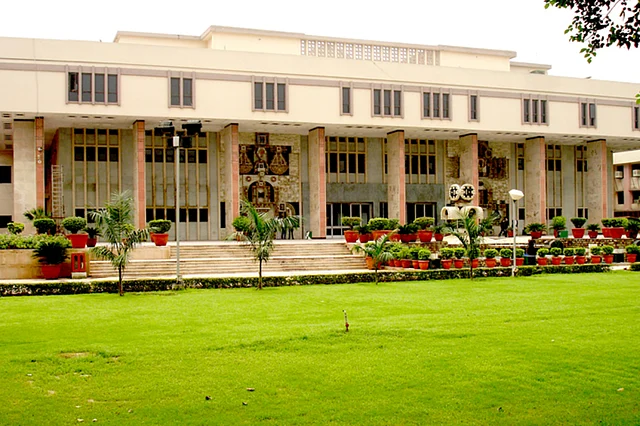
The Delhi High Court in a landmark order has ruled that mere sleeping on the pavement is not a ground to hold a person as “contributory negligent” when a vehicle hits him/her while resting on the pavement. The negligence of a motor vehicle driver may not be tolerated by allowing the victim to share some fault for which the driver had no meaningful opportunity to prevent the accident.
It is well established that a principle of tort law and the Motor Vehicles Act, 1988 is the doctrine of contributory negligence. It also states that if the victim was also negligent in causing the accident, the amount of compensation that can be paid can be lowered accordingly. The doctrine is not a way to deny justice to the victim where he or she was in an unusual or vulnerable place. It is important that there is clear evidence that the victim’s conduct in any way directly and proximately caused the accident.
The rationale of the Delhi High Court is on the basis of the principle that pavements are for people to walk on. Although it is not a suitable or legal form of public use to sleep on a pavement, it does not mean it can be used as an excuse to give up on keeping reasonable standards of safety for the driver while they are behind the wheel. A driver is expected to have proper control over the vehicle, and not collide with foreseeable obstacles, especially in urban areas, where pedestrian presence occurs.
The ruling has significant constitutional implications. The fundamental right of life of every person is guaranteed under Article 21 of the Constitution, which also covers the right to live with dignity. The economic hardship and lack of housing forces thousands of poor people in major cities to spend their nights on the street. Compensation reduction would be a kind of punishment to them for their socio-economic status and not for any legally proven negligence.
The judgment is also in line with the Supreme Court’s decisions on the concept of contributory negligence. The Court in Sudhir Kumar Rana v. Surinder Singh, (2008) 12 SCC 436, clarified that an actual fault on the part of the victim is not per se considered to be contributory negligence, but only if it is a “material contribution” to the accident. Likewise, courts have consistently ruled that the lack of a driving license or other technical offenses do not establish contributory negligence unless there can be shown to be a causal connection.
The practice is consistent with the general trend of the courts which is against presuming contributory negligence. Compensation cannot be reduced because the victim was not wearing a licence, carrying extra passengers or because they were otherwise in breach of a statutory provision, unless the action that was taken was a direct cause of the accident. There is a shift from assumption to causation.
The decision from the policy perspective encourages more accountability of motorists. It reaffirms the drivers’ enhanced responsibility to pedestrians and other vulnerable road users, particularly if they are unable to adequately protect themselves. Road safety should not be sacrificed by other people assuming responsibility for the victim, because they are vulnerable due to homelessness and poverty.
The judgment of the Delhi High Court is far more than a judgment on a motor accident compensation. It’s a reiteration that there should be safeguards for the weakest members of society. The Court has upheld the spirit of dignity, equality and justice which form the backbone of India’s constitutional framework by refusing to consider the pavement dwellers as cause of their own injury. The ruling is a valuable reminder that the contributory negligence doctrine should be applied fairly, sensitively and with clear regard for fault as opposed to social prejudice.