
Recusal Plea by Arvind Kejriwal: Examining Judicial Impartiality and the Rule of Law
Introduction
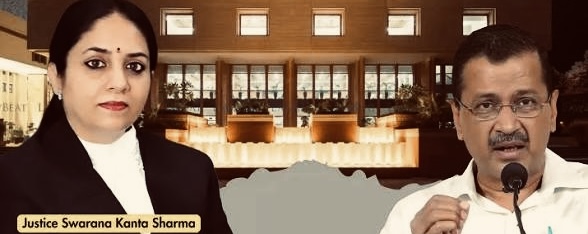
The recusal petition filed by Arvind Kejriwal against Justice Swarana Kanta Sharma has brought back controversies on judicial neutrality, justice and trust of people in the justice system. The case, which was heard in the Delhi High Court, is related to the cases connected with the investigations conducted by the Central Bureau of Investigation (CBI) and the Enforcement Directorate in the Delhi Excise Policy case.
History of the conflict
This is due to the irregularities and corruption claims in the now abandoned Delhi Excise Policy, 202122. The CBI as well as the ED have embarked on their investigations which have resulted in the arrest and prosecution of some of the political leaders including the Chief Minister Arvind Kejriwal. As the legal course of action continued, Kejriwal went to the Delhi High Court seeking a recusal petition on ground that Justice Swarana Kanta Sharma had a habit of judicial reasoning which was perceived to always favour the investigative agencies.
This plea supposedly requested that whatever the CBI and ED file will prevail, which made the request questionable, as to perceived prejudice and the loss of trust in judicial impartiality. Although these claims are grave, they are included in the legal arguments in a bid to make sure that the judiciary has a fair hearing, as opposed to individual accusations against the judiciary.
Law that regulates recusal
The principle of judicial recusal is based on the very principles of natural justice, especially on the doctrine of nemo judex in causa sua no man should judge of his own cause. The judicial process is credible not only due to the actual impartiality but also due to the perception of fairness.
In a number of landmark rulings, the Supreme Court of India has given guiding principles:-
• Union of India v. Ranjit Thakur (1987): It was decided that a reasonable suspicion of bias is enough to justify recusal.
• State of West Bengal v. Shivananda Pathak (1998): It was pointed out that justice should not be done but should be seen to be done.
• Supreme Court Advocates-on-Record Association v. Union of India (2015): Ruled in support of the need to ensure that there is public trust in the judiciary.
• Indore Development Authority v. Manoharlal (2020): Made clear that recusal cannot be requested due to the unfavorable orders given by a judge only.
These cases show that recusal should create a balance between protecting impartiality and ensuring that it is not an abuse of the litigation tactic.
Matters [s] implied in the Plea.
The motion to recuse poses serious legal and constitutional issues:
• Judicial Impartiality: Does the prior judicial observations give rise to a reasonable apprehension of bias?
• Fair Trial Rights: Right under Articles 14 and 21 of the Constitution of India.
• Institutional Integrity: Public trust towards the judiciary.
• Abuse of Recusal Requests: Deter abuse of bench hunting or forum shopping by litigants.
• Importance of Investigative Agencies: Questioning the admissible standards that are followed by courts when trying a high-profile case.
Importance of the Case
The case underscores the sensitive role of the judiciary in determining politically sensitive cases. Courts should make sure that investigative agencies are answerable yet not seen as undue deference. Simultaneously, recusal pleas should not be allowed to jeopardize judicial independence or slow down the process.
The case also highlights the growing judicial questioning of enforcement agencies like the CBI and ED, particularly when it comes to cases involving political leaders. The result of this plea will add to the jurisprudence of judicial ethics and judicial transparency in India.
Conclusion
The recusal petition by Arvind Kejriwal is one of the significant events in the Indian constitutional and judicial history. It puts to the test the freedom of the judiciary and the right to a fair trial. Whether it ends in victory or defeat, the proceedings reiterate the original point that the rule of law depends on the people trusting the judiciary. With Indian courts still going through substantial political and legal wrangles, these cases will be central in the definition of the outlines of judicial responsibility and democracy.