
Personality Rights in India: The Legal History, judicial patterns and the new challenges
Introduction
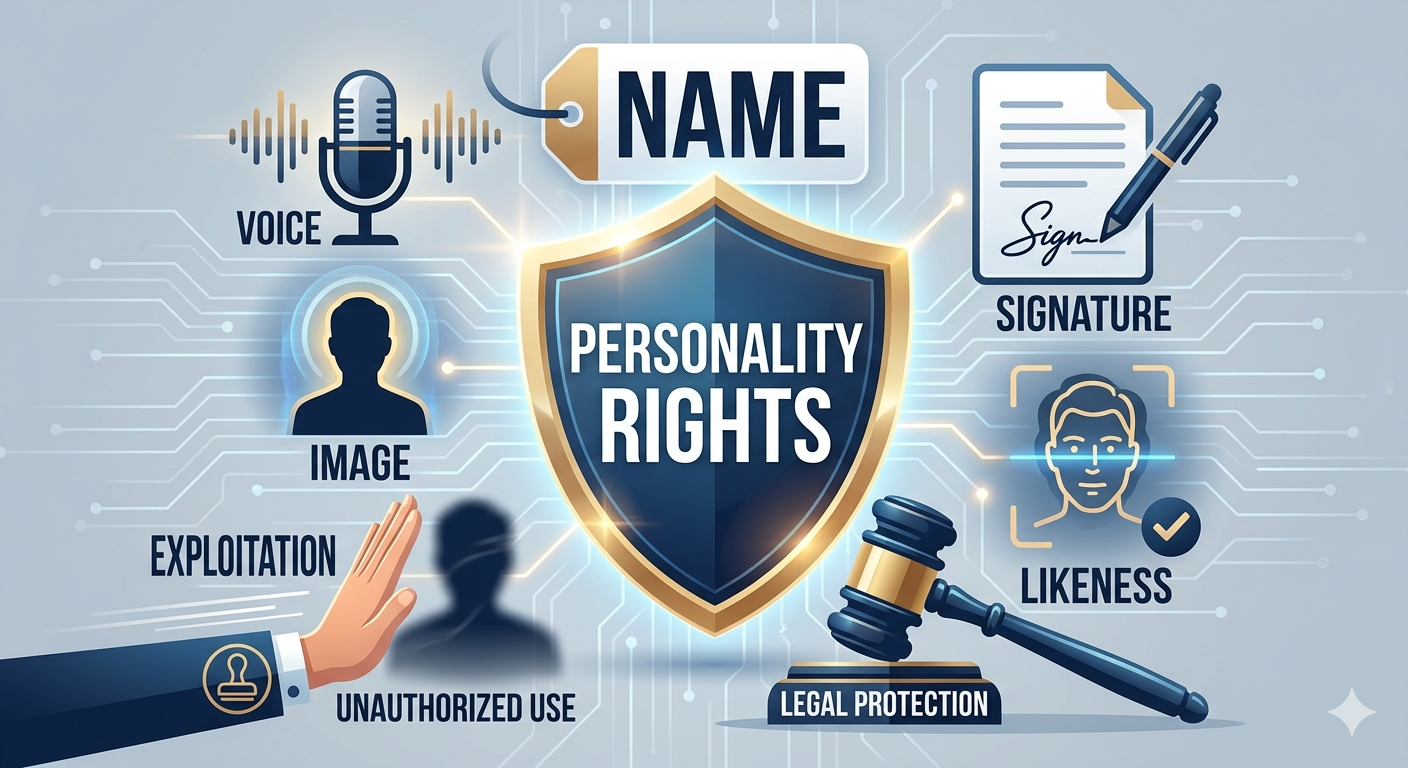
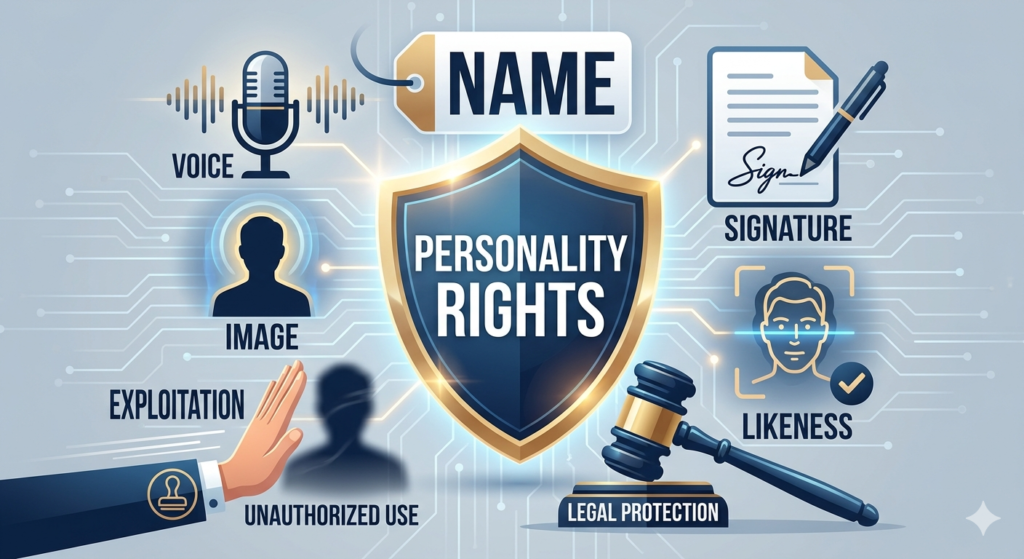
Personality rights, which are also known as publicity rights, is a new, yet a rapidly growing legal sphere in India. These rights guard the persona of the individual such as the name, image, voice, likeness of the individual among other identifiable characteristics against commercial exploitation without the consent of the individual. Personality rights in India have not been provided in written form in one statute, but rather have developed out of judicial interpretation, basing on principles of the constitution and the intellectual property law.
Concept and Legal Basis
The main origin of the personality rights is the right to privacy and dignity as outlined in Articles 21 of the Constitution of India. The historic verdict on Justice K.S. Puttaswamy (Retd.). v. Union of India, 2017 was categorical in entrenching privacy as a constitutional right, and hence giving personality rights a constitutional basis.
Further, personality rights have been associated with the common law tort of passing off that was traditionally applied in trademark cases. This enables individuals mostly celebrities to avoid unauthorized commercial exploitation of their identity where the exploitation can create a false impression on the minds of people or even use their reputation to the detriment of the people.
Caselaws
The Indian courts have been instrumental in developing the outlines of the rights to personality. Among the earliest to note this was in ICC Development (International) Ltd. v. Arvee Enterprises, 2003 when the Delhi High Court recognized that the right of publicity belonged to celebrities, and thus could be commercially utilised and safeguarded.
These rights were further explained in Titan Industries Ltd. v. Ramkumar Jewellery, 2012 where an injunction was prohibited against the use of actor images in adverts. The Court ruled that right to publicity belongs to a person and cannot be employed to commercial benefit without permission.
The well-known personalities who have had this protection extended to include another recent court case of Amitabh Bachchan and Anil Kapoor. In 2022, the Delhi High Court provided interim relief to Amitabh Bachchan, and prohibited the misuse of his name, voice, and likeness in different commercial setting. Equally, in 2023, Anil Kapoor obtained protection against the unauthorized use of his persona, including AI-generated imitations.
These examples demonstrate the readiness of the judiciary to change classic legal principles to suit the new challenges, such as digital impersonation and deepfake technologies.
Meets Intellectual Property Law
Although personality rights differ, they tend to run over the intellectual property regimes like the trademark and copyright law. As an example, famous people can create a trademark of their names or phrases to enhance protection. But the protection of identity is the advantage of personality rights over trademarks that extends even in the unregistered. The lack of a specific law causes some dependence on a collection of rules, including constitutional rights, tort law, and IP principles, which causes a certain inconsistency in enforcement. However, this has provided room to have the doctrine changed on a case by case basis.
Difficulties in a Digital Age
The emergence of social media, the culture of influencers, and artificial intelligence has made it much more difficult to enforce personality rights. Meme culture, unauthorized endorsements, and deepfake videos also bring up the question of whether free speech and commercial exploitation are closely related.
As an example, the voices and images which were created using AI can mirror the personality of a celebrity without copying the face directly, therefore, it is hard to test these using the traditional legal criteria. The issue is drawing more and more cases to the courts where the courts have to decide whether such uses amount to infringement or are within the rights to expression.
The other significant concern is that the right to posthumous personalities is not clear- what and whether they exist after the death of a person. The Indian law is still familial on this issue as opposed to other jurisdictions like the United States where it is statutorily recognized in certain states.
A trade-off between Free Speech and Commercial Rights
The most crucial point of personality rights jurisprudence is their weighing of rights against an exercise of freedom of expression in Article 19(1)(a). Misleading commercial exploitation has been generally shielded by the courts in the artistic and journalistic application of the identity of the person.
This is a balance that personality rights are not turned into an instrument of censorship, without prejudice of the tendency of individuals to unjust commercial benefit of their identity.
Conclusion
Personality rights in India is a law concept that is dynamic and changing and was mostly developed through judicial innovation. With technology further eroding the distinction between identity and representation, a wholesome statutory framework is more urgent. Indian courts will continue to be on the frontline until that time, when it comes to striking a thin line between personal rights, economic gain, and speech liberty.