
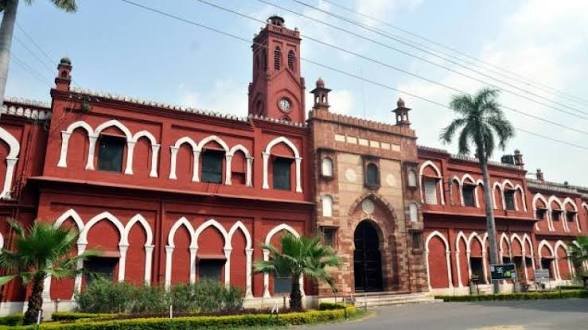
AMUSU elections resume after eight years as students rally against the administration’s decision to hold polls on November 5
Introduction
The administration of the Aligarh Muslim University (AMU) has declared the election of the Aligarh Muslim University Students’ Union (AMUSU) on 5 November 2026, after the students had been protesting for the return of an elected body for last 7 years. The decision is a major step in the democratisation of campus and in participation of students in governance of the university. This was after discussion between the university administration and student representatives. It was a period of eight years without elections.
Background: Eight Years Without Elections
The last AMUSU elections were held during the 2018–19 academic session. Students have made several demands to restore an elected union, saying that the lack of such an election has denied students a platform for raising issues about academic facilities, hostel conditions, campus security, student welfare etc.
The demand started to gain traction in September 2026 when the MA Urdu student Yasar Fahad started an indefinite hunger strike. Students held demonstrations and presented memoranda demanding a definite election date. The movement lasted for many weeks and the hunger striker became an icon in the movement.
The Administration announced the election period last week.Last week, the Administration announced the election period.
Vice-Chancellor Naima Khatoon met with a student delegation of 13 members and agreed to hold elections. The university also announced that Professor Mohammed Nafees Ahmad Ansari will be replacing Professor Mohammed Naveed Khan as the university proctor.
As per the announced schedule the electoral roll is supposed to be put up on 26th October, nominations will be held on 29th October, and the final list of candidates is expected on 31st October. Polling will begin Nov. 5 from 9 a.m. to 5 p.m. and the counting process is set to begin at 7 p.m.
The statement is an administrative promise to return student representation by election. But what will happen with the polling and the new union’s makeup is the next hurdle.
The legal framework is Student Representation and Campus Democracy
The issue brings with it a number of general questions on democratic involvement in school. Article 19(1)(a) of the Constitution guarantees freedom of speech and expression while Article 19(1)(c) guarantees the right to form associations and unions, which is subject to the limits of the Constitution. These protections apply to students’ capacity to organise, raise grievances and engage in collective activities.
The decision in University of Kerala v Council, Principals Colleges, Kerala (2006) of the Supreme Court is also applicable in the context of student union election. The Court also pointed out the necessity of holding campus elections and approved the recommendations of the Lyngdoh Committee which recommended safeguards relating to the expenditure of funds, eligibility, electioneering and the conduct of student polls.
However, this does not result in an obligation to conduct elections irrespective of the governing statute, regulations or applicable judicial directions of a particular university. The election process shall be so conducted as to abide by the applicable guidelines and the relevant university rules.
Why the Restoration Matters
An elected students’ union can offer a recognised forum for students’ concerns to be raised with the administration, as a means of ensuring that lawful protests are encouraged and that leadership development is encouraged. If it is not present for a prolonged period, it can undermine the accountability of institutions and expose students to relying on informal representations.
Meanwhile, elections should be held in a peaceful, transparent and fair manner. Equal opportunities must be afforded to all eligible candidates and the administration must ensure that the electoral process run according to the rules.
Conclusion
The news of AMUSU elections after almost 8 years is a significant stride towards the restoration of the representative student governance at AMU. Collective peaceful protest among students shows that such action can be effective in raising institutional issues for the attention of the administration.
The real challenge, however, will come when the November 5 election is held: timely and fairly. The successful establishment of a students’ union should not only be an electoral result, it should be a positive and valuable platform for student welfare, student accountability and democratic involvement at the university.