Jantar Mantar Lathi-Charge: Right to Protest and Police Powers
The lathi-charge by the Delhi Police on protesters at Jantar Mantar has triggered a heated debate on the fringes of rights and duties. The alleged use of force to charge crowds that had assembled to air their views has drawn condemnation from various quarters. The Jantar Mantar incident has further rekindled the old and contentious issue of the rights and restrictions on the right to protest.
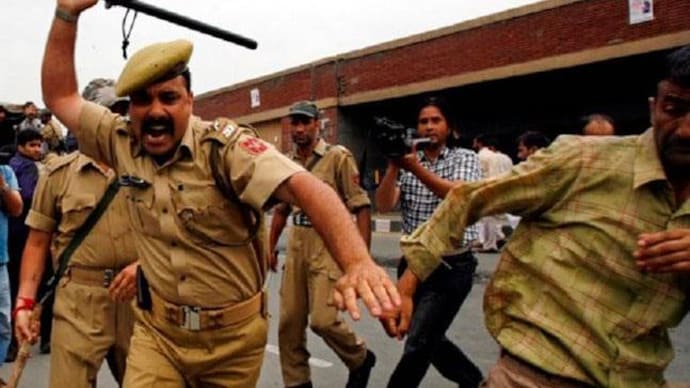
Jantar Mantar is one of the prime locations where people’s grievances have been heard through protest actions. Citizens, social activists, workers, employees, students, and political parties have used this platform to express their opinion and demand action for redress. However, just as every other right, this right too comes with its limitations and restrictions under the law.
The right to protest lies implicitly in the right to freedom of speech and expression (Article 19(1)(a)) and the right to assemble (Article 19(1)(b)). As such, protests and demonstrations are legal and do not violate Article 15 of the Constitution on prohibition on discrimination on grounds of various factors. However, the right to protest is not absolute and comes with reasonable restrictions under Articles 19(2) and 19(3).
The power to direct and regulate assemblies lies with the police in terms of the Bharatiya Nagarik Suraksha Sanhita, 2023, the Delhi Police Act, 1978 as applicable statues. This law allows the police to give directions for the dispersal of crowds and to take measures to ensure public order if there are reasonable grounds for such belief. Further, if the crowd turns violent or refuses to disperse when directed to do so by the police after warnings, the police can use force to charge the crowd. However, any use of force has to be lawful, necessary, and not excessive. Police cannot use force as a matter of choice and must resort to it as a matter of last resort.
The protection of the right to protest has been recognized by the Supreme Court as a fundamental right integral to democracy, particularly for enabling the free exercise of rights. The court in Mazdoor Kisan Shakti Sangathan v. Union of India, (2018) has held that while the right to protest belonged to the people, as a democratic nation, India had to impose restrictions on the right for the preservation of the rights of others. As such, the right was a shared responsibility of the State and the people and had to be exercised rationally with due respect. Further, in Amit Sahni v. Commissioner of Police Shaheen Bagh case, (2020) the Supreme Court was clear that protests cannot turn perpetual and encroach on public places. However, at the same time, the right to protest belonged to the very foundation of Indian democracy and was integral to the Indian Constitution’s ethos. As such, it was the right of the people to question the powers of the State.
When examining whether a lathi-charge is illegal or not, the Court evaluates the situation in which the police found itself, the actions of the protestors and whether the police acted unreasonably and illegally. When protestors turn violent, or damage public or private property, the police are justified in using force to charge crowds. Wherever this was absent, the use of force would be illegal as it would constitute a violation of the right to protest.
Protestors against the use of force by the police in Jantar Mantar have the legal remedies available to them as citizens of this country as well as the right to approach the Supreme Court directly. The Supreme Court has in the past awarded compensation to protestors whose rights to protest had been unlawfully restricted. As such, protestors may approach the Court under Article 32 and seek remedies available under Articles 32 and 226 of the Constitution.
The incident of the lathi-charge at Jantar Mantar shows that democracy and rights come with responsibilities. The responsibility of ensuring that democratic rights are not misused lies primarily with the State, and particularly the police. The role of the police is to ensure that they restore order by using non-forceful measures first and force as a measure of last resort. The law on rights of citizens as well as the rules on the use of force by the police reflect some of the principles of international human rights law on the use of force by law enforcement agencies and the responsibility of the State in the protection of the rights of the people.
In conclusion, the right to protest comes with its own limitations and restrictions. It does not mean that democracy does not require order. However, the imposition of law and order by the State has its own limitations for the preservation of citizens’ rights. A healthy democratic system requires a balance between order and the right to protest as well as the right to life and liberty of every individual.