Balancing Religious Rights and Public Order: The Madras HC’s Coimbatore Church Ruling
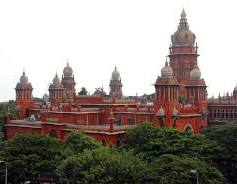
The Madras High Court, in an important decision dated 17 June 2026, issued a ban on the construction of a large church next to a 100-year-old temple of the Goddess Mariyamman in Coimbatore, setting a precedent in India’s religious harmony jurisprudence and minority rights and the state’s obligation to ensure public order.
It happened because the overwhelming majority of the area was Hindu who were violently protesting the construction of the church in the immediate vicinity of the temple. The bench, consisting of Justice GR Swaminathan and Justice V Lakshminarayana, said that this cannot be “swept aside” by authorities when there is widespread opposition from the majority community to the religious establishment of a structure in close proximity.
Key Legal Observations
The Court’s reasoning focused on three core principles:
1. The intent to harm or offend is a necessary element of misconduct.Motive to offend or cause harm is a factual component of wrongdoing.
When a big church was proposed close to an ancient temple in the city of Coimbatore, the Court, which called the city “communally-sensitive” on the back of past bomb blasts and religious riots, said the “mala fide intentions could not be ruled out”. There was legitimate concern over possible communal upheaval, as the proposed church was “within a stone’s throw” of the temple for the worship of the goddess Mariyamman.
2. The State’s obligation with established religious rights.
The Court stated that the State should not “have to submit to majority opposition” but if the right is found, or it is established, the State will have to do everything possible to defend it. In this instance, however, the Court concluded that a prima facie case of restraint existed, and that “where a religious right exists, it is the responsibility of the state to assist in its observance”.
The study unit examines the concept of land title and how it affects the context.
The Court pointed out that the case would have been different if construction had been on “patta land” with an undisputed title, if there was no temple of another community in the vicinity, or if there was no opposition. Lack of these factors put in order the case for restraint.
Constitutional Implications
This decision refers to the delicate balance between Article 25 (freedom of conscience and religion) and Article 26 (right to manage religious affairs) of the Indian Constitution, both of which are subject to the public order, morality and health. The Court effectively sided with the public order concerns and against the unqualified right to build, in line with Supreme Court decisions that private religious buildings on public property are not the forum to exercise their religious functions.
Further, the judgment reiterates the earlier ruling passed by the Madras HC on 23 November 2025 in Dindigul, Justice Swaminathan’s order of which stated that the government cannot reserve land for a religious community alone. But the Coimbatare case is rather critical, as it is not about the exclusive use of public space but about the disputed land near an existing temple.
Critical Analysis
The decision will help maintain communal harmony but also introduces concerns of majority veto power in the construction of minority religious buildings. The Court’s focus on “overwhelming majority” opposition may create a precedent that could lead to decisions about religious infrastructure being made in the context of demographical “dominance. It might be claimed by critics that this practice is contrary to the constitutional principle of equality of religions.
On the other hand, in the intricate communal context of India, the Court’s practical stance has accepted that, when the decision concerns religious constructions and is likely to impact public order, the same cannot be purely administrative. The temporary injunction can be utilized for more in-depth investigation without causing immediate escalation.
Conclusion
The Madras HC’s order is a fine balance between religious freedom and public order. This confirms, at the same time, that the authorities are required to take seriously community concerns in “communally sensitive areas” and that existing religious rights are preserved. The decision will be pertinent to future cases involving challenges to proximity of temple-church-mosque across India and will have a bearing on the interpretation of the issue of proximity by courts and the authorities in the future.