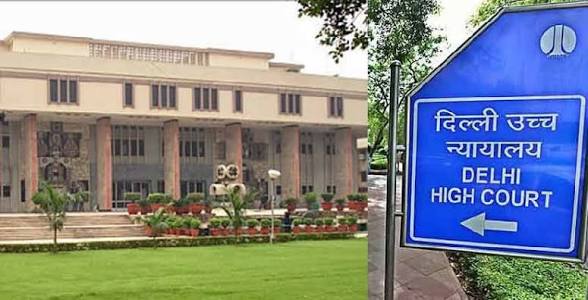
Delhi High Court differentiates between personality rights and criticism of politics
The Delhi High Court recently refused to grant an emergency injunction against a set of tweets by a critic of a politician Raghav Chadha, who is accused of changing his political party. The recent order passed by the Delhi High Court to bar an anti-politician Raghav Chadha from issuing any injunction against social media posts alleged to have switched his political party has raised an interesting question on the limits of personality rights and protection of a person’s political speech. The judgment demonstrates the judiciary’s circumspectness and the tension that exists between the private rights of the individual and the public and democratic right to criticism.
The clash of opinions came after some online posts and content allegedly tarnished Raghav Chadha’s character by hinting at his political leaning towards the Bharatiya Janata Party (BJP). The petitioner had allegedly contended that the posts had infringed his personality rights, harmed his public image and formed a false narrative in politics. An injunction was applied for to remove or restrain such content now.
But the Delhi High Court refused to issue immediate interim protection. The Court noted that the freedom of speech and expression guaranteed by Article 19(1)(a) of the Constitution also provides constitutional protection to political criticism, satire, commentary and public discussion of the politicians. The Court seemed to make a clear distinction between criticism in a political context as opposed to illegal use of personality rights for commercial purposes.
Personality rights are rights concerning an individual’s name, likeness, voice and identity and which are intended to prevent their unauthorized commercial use, such as rights to privacy and publicity. These rights have been increasingly recognized by the Indian courts, especially in the context of public figures, celebrities and athletes. But the current case shows that this right is not without limitations, particularly in the context of democratic freedoms and public debate.
The Court’s decision not to grant an initial injunction also illustrates judicial caution in restraining speech at an early stage unless there is a clear case of wrongful defamation, misinformation or irreparable harm. Indian constitutional law has traditionally been unfriendly to prior restraint of speech, save in rare cases. Plaintiffs have long won cases against public figures, such as politicians, who are held to a higher standard for scrutiny, criticism and even satire given the nature of democratic politics.
The decision has implications for digital political communication in India. In an age of social media campaigns, memes and quick snapshots of the web’s opinion, the courts are increasingly faced with clashes between reputation and free speech. The High Court of Delhi reaffirmed that political criticism is not something that can be suppressed with ease, just by invoking the right of personality.
But the judgment does not mean that there is no limit to the spread of falsehoods or defamatory information. Where statements are found to be maliciously made or damaging to the extent that they are not just fair criticism, there are still remedies available under defamation law and other civil action. The Court’s interpretation, however, allows for robust political criticism, even when it makes the uncomfortable stomach turns of public officials.
In the end, the judgment further reinforces constitutional values and promotes the constitutional protection of political speech in the Indian democratic system. The Delhi High Court’s separation of commercial personality rights from legitimate political criticism is a significant advancement in free speech law in today’s technologically-driven environment.