

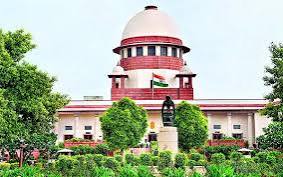
Supreme Court rejects plea against restrictions on Christian missionaries entering Chhattisgarh tribal villages
Introduction
Dismissing an appeal against a decision of the Chhattisgarh High Court on February 16, 2026, the Supreme Court held that notices and so-called hoardings forbidding the entry of Christian pastors and converted Christians to some tribal villages, in the Kanker district, were upheld. This move was justified as a precautionary measure of Gram Sabhas to protect the indigenous communities against the so-called forced or induced religious conversions.
Tribal Autonomy and PESA
PESA that is implemented in fifth schedule regions such as portions of Chhattisgarh grants self-governance to Gram Sabhas. They are able to control social norms and maintenance of culture to safeguard tribe identity. The High Court had backed the fact that the hoardings had been put there in the context of this framework and were aimed at protecting indigenous tribes and local cultural heritage and not the per se discrimination.
Constitutionally, the case shows the conflict between individual and the rights of communities as set forth by PESA. As the religious freedom, on one hand, as referred to in Articles 25 and 26, encompasses the right to propagate religion, on the other hand, the right to propagate encompasses the right to convert another person to the faith by use of force, fraud and allurement (refer to Rev Stanislaus v. State of Madhya Pradesh (1977)).
Religion vs. Culture Conservation
The petitioners voiced that the hoardings constituted illegal segregation where the exclusion of pastors or converts under whatever circumstances constituted discriminatory segregation. However, the High Court and Supreme Court paid more attention to procedural propriety -i.e., avenues under statutory means of questioning Gram Sabha action- than whether the restrictions conflicted with constitutional freedoms.
The logic of the High Court (which was supported by the Supreme Court, which claimed that they did not want to meddle in tribal culture and harmony) echoed that there were fears that so-called inducements-based conversions would change the culture and harmony in the tribes. Even modern assessments have referred to such instigated conversions as detrimental to intercultural cohesion and cultural continuity, particularly in the economically susceptible tribal regions.
Secular ethos in India is constitutionally oriented towards bringing justice on the freedom of an individual and community interest. Article 25 ensures that there will be freedom of religion propagation, however it is subordinate to the state order, morality and health. Anti-conversion laws of the state (including the Chhattisgarh Dharma Swatantrya Adhiniyam) outlaw forced conversions and conversion through allurement as well.
Broader Implications
The order by the Supreme Court does not amount to a substantive statement that Gram Sabha bans qualify to be constitutional. Instead, it emphasises the restraint of courts where there is no adjudication, as there is at least in effect, and the need to consider statutory redress beforehand. Considering legal battles against anti-conversion statutes and constitutional rights (including an impending challenge in the Supreme Court to multiple state freedom-of-religion laws), this case is a premonition challenging the Indian constitution with thorny constitutional issues of how the secular Indian system can be compatible with tribal protections against autonomy.
To the legal observer perspective, the case restates the fact that constitutional rights are usually challenged in crossroads between individual freedoms and national cultural needs. The way in which courts work out these contradictory values, without breaching procedural propriety, will go on to inform the conours of jurisprudence relating to religious freedom in India.