
State of Punjab v. Davinder Singh (2024): Sub-Classification has a New Era in Reservations
Introduction
The historic case of State of Punjab v. A major milestone that was made by Davinder Singh in the reservation jurisprudence in India is that it brought a drastic shift in the history of Indian reservation laws. The decision decided a key constitutional issue: how the State can develop sub-classification of Scheduled Castes (SCs) to guarantee the delivery of the benefits on reservation to the most marginalized populations.
Background of the Case
The conflict arose when the State of Punjab tried to provide preferential reservation under the Scheduled Caste group to otherwise socially and educationally backward communities. The main constitutional question was whether SCs present one homogeneous group or the State can once again divide them so that they can have equal distribution of the benefits of reservation.
In a case previously, the Supreme Court in E.V. Chinnaiah v. State of Andhra Pradesh had that Scheduled Castes is a homogeneous class which could not be subdivided. In 2024, the case returned to this precedent and questioned the reasonableness of such an interpretation in realizing the constitutional objective of social justice.
The Supreme Court Rationale
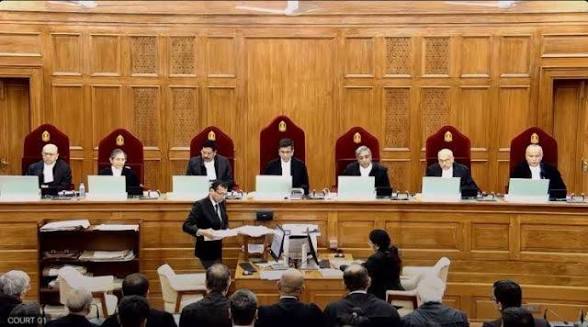
The Court, in a decision of 6:1 majority ruled that sub-classification within the Scheduled Castes and Scheduled Tribes is constitutional. The majority thinking was that treating all the SC groups the same is a way of overlooking internal inequalities inside the category. There are communities that might continue to be grossly underrepresented, even decades after receiving benefits of reservation.
This Court made use of Articles 14, 15 (4), 16 (4) of the Constitution of India that permits the State to take a positive action to promote socially and educationally backward classes. It stressed that equality under Article 14 does not only imply formal equality but substantive equality, in other words, policies should be able to deal with actual social disadvantages. ([Lawyer Talks][1])
The Court further made it clear that sub-classification does not contravene the Article 341 that grants the President the power to inform the list of Scheduled Castes. Sub-classification makes no difference with that list; it only controls how reservation benefits are distributed in the list.
Creamy Layer and Internal Equity
The other notable finding to the judgment was the implication that, governments ought to look into finding a creamy layer within the SC and ST communities, so that the reservation benefits could be extended to the worst-off sections. This is the attempt by the Court to avoid the monopoly of benefits by comparatively advanced groups in reserved categories.
The importance of the Judgment
The decision marks a change between formal and substantive equality in the interpretation of the constitution. The Court did not presuppose that every individual in a category experiences the same amount of disadvantage but recognized the heterogeneity of marginalized communities.
There are a number of implications of this decision in general:-
1. Flexibility of policies to States – Governments are able to come up with specific reservation policies that are based on empirical research.
2. Enhanced sharing of benefits – Sub-classification may be useful to guarantee that sub-groups that are historically neglected are granted meaningful representation.
3. Empowering social justice – The ruling conforms to the constitutional dream which envisions the strengthening of the most underprivileged groups in the society.
Conclusion
The decision of State of Punjab v. Davinder Singh is the turning point in the affirmative action system in India. The Supreme Court has realized the intricate nature of social inequality and has stressed that equality does not always mean treating everyone the same by permitting sub-classification in Scheduled Castes. The ruling supports the constitutional principle of social justice, inclusive development, and substantive equality, which may influence the reserve policy in India in years to come.