
Allahabad High Court Issues Contempt Notices To Bareilly DM, SSP Over Alleged Interference In ‘Namaz’ At Private Property
Introduction
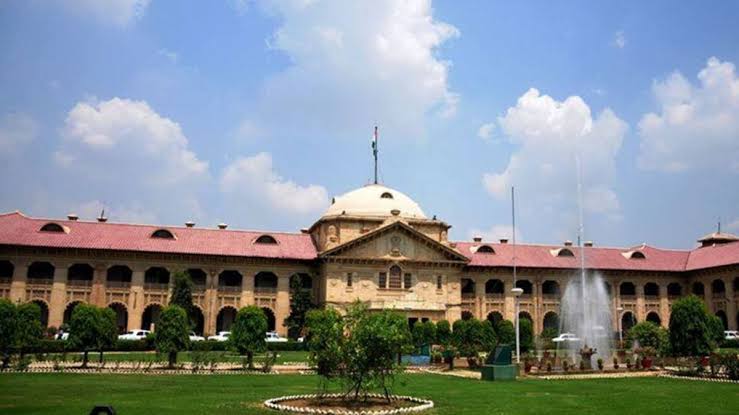
In this case, the District Magistrate (DM) and Senior Superintendent of Police (SSP) of Bareilly were issued contempt notices by the Allahabad High Court on charges of interference with the conduct of offering of namaz in a privately owned plot of land. The case has significant concerns under the constitutional rights, executive powers, and judicial checks and balances.
Background and Context
The case is reported to be about the allegations that the local authorities interfered and denied or blocked the performing of namaz within the individual premises. It is alleged that the petitioners went to the High Court arguing that this interference was against previous judicial guidelines and that such a move contravened their basic rights. With this awareness, the Court gave notice of contempt to the involved authorities to provide a response on whether or not their act was wilful disobedience of judicial orders.
Jurisdiction to contempt is not taken lightly. When a constitutional court also brings contempt action against top officials of administration and police it is an indication that there is prima facie apprehension that the power of the Court or its obedience to its orders might have been compromised.
Constitutional Dimensions
The very core of the controversy is the Article 25 of the Constitution of India which guarantees to everyone the right to freedom of conscience as well as to freely profess, practice and spread religion. Offering namaz is an obligatory religious duty in Islam and the courts in India have severally acknowledged that religious activities that are performed amicably and without violation of the law and order is under the umbrella of Article 25.
Article 25 is however not absolute. It is specifically subordinate to the public order, morality and health among other provisions of Part III. The State may place reasonable restrictions in case a religious activity endangers the order of society or breaks the law in force. As such, the lawfulness of the supposed interference would be determined by whether the authorities acted within the realms of legal regulation, or violated the constitution by going into the area of unconstitutional restriction.
Article 14 (equality before law) and Article 21 (protection of life and personal liberty) could also be involved. Arbitrary executive action particularly when selectively applied may be subject to examinations under Article 14. On the same note, unwarranted encroachment of private property in the peaceful practice of religious beliefs can also cause alarm in a wider understanding of personal liberty under Article 21.
Sovereign Property and State Authority
The nature of the property (on which namaz was offered) is another major problem. In the case when the prayers took place on the personal territory with the agreement of the owner and did not destabilize the peace of the people, the interference of the executives would need serious legal arguments. The State is not free to intrude into the private property or limit lawful activity in the property otherwise.
The Code of Criminal Procedure 1973 has police powers that enable the police to act preventively so that order in the society can be maintained such as that of promulgation of prohibitory orders under Section 144 CrPC. Nevertheless, the power has to pass the requirements of necessity, proportionality, and non-arbitrariness as it has stressed in several Supreme Court precedents.
Jurisdiction of Contempt and Rule of Law
The contempt notices have been issued which shows that the High Court is looking into whether their previous directions were not broken. High Courts are courts of record, and may punish contempt as well, under Articles 215 and 226 of the Constitution. Failure to comply with the order of a court wilfully seems to undermine the rule of law and the authority of the courts.
Another way that the principle that is based on the fact that executive power is subject to judicial review is fortified is through contempt proceedings against administrative officers. Even top officials have to do in accordance to the law and follow the judicial binding direction in a constitutional democracy.
Conclusion
The episode with Bareilly shows how fragile religious freedom and the task of the state to ensure order in society can be. The decision in the case before the Allahabad High Court should shed more light on whether the executive can intervene in the religious activities on the privately owned land or not. On a wider scale, it confirms once again that the constitutional guarantees, which once have been identified and secured by the judicial orders, cannot be easily ignored by the administrative bodies.