
Bombay High Court Holds Up Verdict on Rahul Gandhi on Defamation Case
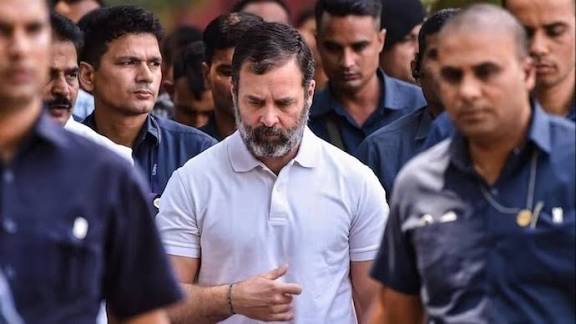
The Bombay high court recently adjourned its decision on a petition made by Rahul Gandhi requesting to suppress a criminal defamation case that arose due to the comments that were allegedly made against Prime Minister Narendra Modi. This case is especially important to who is passionate about law because it is on the border of the political speech, criminal law, and constitutional freedoms.
The complaint has been made in accordance to the provisions of Sections 499 and 500 of Indian Penal Code, which punishes defamation. The complainant argues that the defamatory statements by Gandhi were damaging the reputation of the Prime Minister. Gandhi in his defense has sought the High court under Section 482 of this code of criminal procedure under the inherent powers of the Court to avert the abuse of process and to ensure the ends of justice.
Constitutionally, the issue involves Article 19(1) (a) of the Constitution of India that ensures the freedom of speech and expression. In democratic discourse, political speech, particularly the criticism of the government officials, is placed on the high pedestal. Nonetheless, Art.19(2) allows reasonable limitations because of defamation, which will thus validate criminal defamation laws under the constitution. Subramanian Swamy v. Union of India (2016), the Supreme Court affirmed the constitutionality of criminal defamation, and reputation is one of the aspects of Article 21.
The major legal question in the High Court is whether the statements alleged constitute defamation under Section 499 IPC or it comes under one of the exceptions to it including imputation made in good faith in the good of the people. Courts have always maintained that political criticism should be drawn between personal attack and political criticism. The test of quashing at the preliminary level is also difficult; it has to be established that despite an alleged offence being made out, in fact, no offence is committed.
The decision taken by the Bombay high court to reserve its verdict is an indication that it is a case that should be subjected to keen judicial examination. This will have a probable contribution in the development of jurisprudence that is related to the boundaries of political criticism and the future applicability of criminal defamation in the constitutional government of India.