
Anti-Conversion Laws in India: Between Faith and Freedom
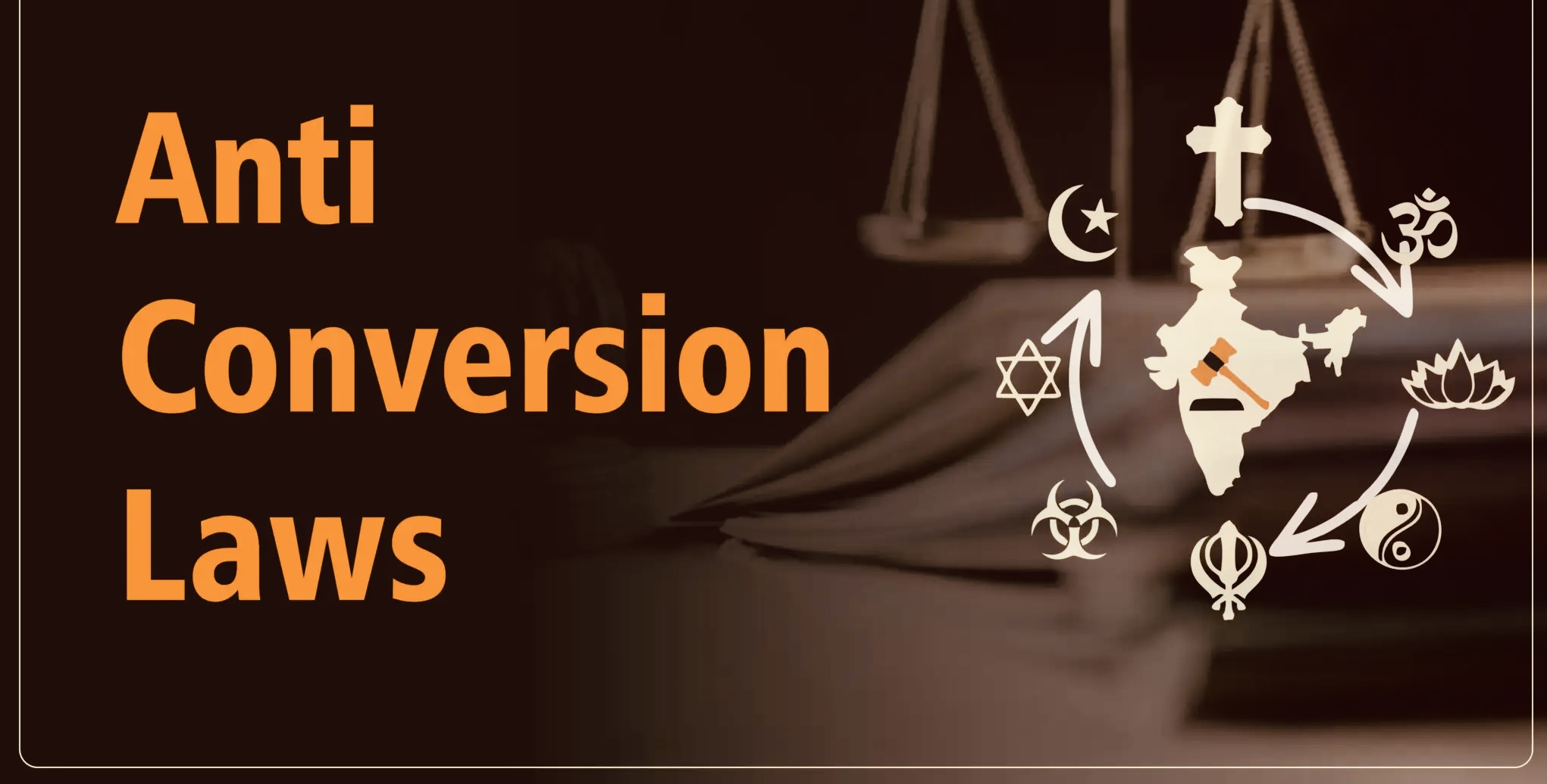
One of the most personal decisions a person can make is their faith. Identity, values, community, and occasionally even survival are all shaped by it. The issue of religious conversion has always been delicate in a multireligious nation like India. At the heart of this controversy are anti-conversion laws, sometimes referred to as “Freedom of Religion” laws. State laws that aim to control religious conversions are known as anti-conversion laws. Generally speaking, they forbid conversion by coercion, deception, undue influence, or seduction. Protecting vulnerable people from coercion or manipulation seems like a reasonable goal on paper. But the truth is much more nuanced.
Every Indian citizen is guaranteed the freedom of conscience and the freedom to openly declare, practice, and spread their religion under Article 25 of the Indian Constitution. The term “propagate” has been at the center of numerous discussions. Does the right to convert someone fall under the definition of propagation? In the 1977 Rev. Stanislaus case, the Supreme Court ruled that although people are free to spread their faith, they do not have the fundamental right to convert others. The constitutional basis for state-level anti-conversion legislation was established by this interpretation.
Such laws have been passed by a number of states, including Gujarat, Himachal Pradesh, Odisha, Madhya Pradesh, and Uttar Pradesh. Some of these laws have recently been amended to include clauses pertaining to interfaith unions, especially in light of concepts like “love jihad.” Opponents contend that these clauses frequently conflate purported coercion with free will. Proponents of laws against conversion contend that they are required to stop the exploitation of communities that are socially or economically vulnerable. They assert that, particularly in rural or marginalized areas, threats, financial incentives, or fictitious job promises are occasionally used to sway conversions. According to this viewpoint, the law serves as a barrier.
Critics, however, express grave concerns. A significant critique of these laws is that they may stifle religious freedom. Prior notice to district authorities prior to conversion or post-conversion scrutiny may violate people’s right to privacy and discourage them from exercising their constitutional rights. Even when conversions seemed voluntary, arrests and investigations have occasionally taken place, giving rise to claims of abuse.
The social climate that these laws may create is another issue. In India, caste, community, and politics are all intricately linked to religion. Conversion may exacerbate tensions within the community when it is criminally investigated. Many people view conversion as a means of social protest or an escape from prejudice, in addition to being a spiritual act. Personal autonomy may be unintentionally restricted by laws that complicate this process.In the end, the argument over anti-conversion legislation is not just a legal one, but also a philosophical and moral one. It poses important queries, such as: Is it really possible for the government to judge someone’s sincerity of faith? How should the law strike a balance between individual freedom and protection from coercion? Where does individual freedom start and social order finish? Making sure that laws protect without policing conscience is a challenge in a pluralistic democracy. After all, faith is a very personal journey and is not merely a question of public order.