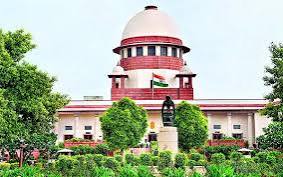


Why are a huge number of cases pending in the Indian Courts
Introduction
India boasts one of the largest judicial systems in the world, but it grapples with a growing backlog of cases. For ordinary citizens, seeking justice in court can be a lengthy and uncertain journey, with delays of years or even decades. The issue of judicial pendency is a critical challenge for the Indian justice system.
Judicial Pendency
Judicial pendency refers to cases that have been filed in courts but are still awaiting final decisions. Currently, there are over 4.8 crore pending cases in the Supreme Court, High Courts, and subordinate courts in India. The rising number of cases indicates improved legal awareness and access to justice, but also highlights significant structural deficiencies in the judicial system.
The issue is particularly acute in subordinate courts, where the majority of cases involving regular citizens are handled. Delays at this level can have a domino effect, leading to appeals and revisions being pushed to higher courts and contributing to the overall backlog.
Reasons for the delay
1. Shortage of Judges.
One of the main causes of judicial delays is the severe lack of judges. India has a low judge-to-population ratio compared to global norms. Numerous judicial positions are unfilled in courts, leading to existing judges being overwhelmed with an excessive number of cases.
When a judge is responsible for handling hundreds of cases daily, conducting meaningful hearings becomes challenging. This results in delayed judgments and compromises the quality of justice dispensed.
2. Frequent Adjournments and Procedural Delays
Another significant factor contributing to delays is the frequent use of adjournments. Hearings are frequently rescheduled due to various reasons such as parties’ absence, unavailability of lawyers, lack of preparedness, administrative issues like judge transfers, or incomplete records. Despite courts emphasizing that adjournments should be rare exceptions rather than the norm, the practice remains deeply ingrained in the legal system. What may seem like a brief delay often results in months of setback for a case.
Moreover, the lengthy and intricate procedures involved in civil and criminal trials further impede the pace of justice. These trials encompass multiple stages, including pleadings, evidence presentation, cross-examination, and arguments. Any delay at one stage can significantly prolong the entire case.
3. Lacking infrastructure and staff.
Judicial efficiency does not solely rely on judges. Many courts face issues with inadequate infrastructure and a shortage of supporting staff like clerks, stenographers, and court managers. Insufficient courtrooms, outdated facilities, and a lack of technological support hinder effective case management. While digital initiatives have enhanced access in some areas, inconsistent implementation across states remains a hurdle.
Impact on the Citizen.
The impact of judicial delays is significant, with litigants experiencing prolonged financial and emotional strain as they spend years resolving a single dispute. Businesses also suffer from unresolved commercial conflicts, impacting economic growth. Of the particular concern is the plight of undertrial prisoners, many of whom languish in jail for extended periods without being convicted. The Supreme Court has acknowledged that lengthy detention and delayed trials violate Article 21 of the Constitution, which guarantees the right to life and personal liberty, including the right to prompt justice. In the case of Hussainara Khatoon v. State of Bihar, the Court emphasized that the right to a speedy trial is a fundamental aspect of Article 21. Despite this constitutional requirement, systemic delays persist, undermining this fundamental right.
Steps taken to resolve the issue
In order to address the issue of judicial pendency, the Indian judiciary has implemented various reform measures. Lok Adalats and alternative dispute resolution methods have been instrumental in resolving a large number of cases, especially in areas such as cheque bounce, motor accidents, and family disputes.
The introduction of the e-Courts project and the expansion of virtual hearings have enhanced accessibility and transparency, particularly in the wake of the COVID-19 pandemic. Fast-track courts have been set up to handle specific types of cases, leading to faster resolution.
Although these initiatives have produced favorable outcomes, they are not sufficient to fully tackle the underlying problem.
Case laws which show the pendency in the Indian courts
1. Hussainara Khatoon v. State of Bihar (1979)
Court: Supreme Court
Nature of pendency: Undertrial prisoners
Delay: Some undertrials were in jail for longer than the maximum punishment for their alleged offences.
This case exposed massive pendency in trial courts, especially in Bihar.
Led to recognition of speedy trial as a fundamental right under Article 21.
2. A.R. Antulay v. R.S. Nayak (1988)
Court: Supreme Court
Delay: Case dragged on for over 8 years
The Court acknowledged that judicial delay itself can violate fundamental rights.
Laid down principles to judge whether delay is unreasonable.
3. Common Cause v. Union of India (1996)
Court: Supreme Court
Nature: Criminal cases
Delay: Thousands of petty criminal cases pending for 10–20 years
Supreme Court ordered closure of long-pending minor criminal cases.
Highlighted systemic pendency in magistrate courts.
4. Babri Masjid–Ram Janmabhoomi Title Suit
Court: Allahabad High Court → Supreme Court
Delay: Over 60 years (1950–2019)
One of the most cited examples of pendency in civil litigation.
Demonstrates how politically sensitive cases remain unresolved for decades.
5. Coal Block Allocation (Coal Scam) Cases
Court: Special CBI Courts
Delay: Investigations and trials continued for more than a decade Even after Supreme Court cancellation of coal blocks (2014), trials moved slowly.
it shows pendency in special courts handling economic offences.
6. Bhopal Gas Tragedy Cases
Court: Trial courts, High Court, Supreme Court
Delay: From 1984 disaster to final settlement in 1989, and criminal cases lingered till 2010
Victims waited decades for justice.
A classic example of pendency affecting mass tort litigation.
7. Manubhai Ratilal Patel v. State of Gujarat (2013)
Court: Supreme Court
Issue: Delay in criminal appeal
Delay: Appeal pending for over 14 years
Court criticised the justice delivery system for excessive pendency.
Emphasised speedy disposal of criminal appeals.
8. Salem Advocate Bar Association v. Union of India (2005)
Court: Supreme Court
Issue: Civil procedure delays
Case itself arose due to pendency in civil courts.
Court acknowledged that civil suits in India often take 20–30 years.
9. Nirbhaya Case – Execution Phase
Court: Trial Court → High Court → Supreme Court
Delay: 2012 crime, execution in 2020
Despite fast-track trial, post-conviction remedies caused long delays.
Shows pendency even in death penalty cases.
10. Motor Accident Claims Cases (MACT)
General observation (multiple cases)
Delay: Compensation cases pending for 5–15 years
Supreme Court has repeatedly noted pendency in MACT courts.
Victims suffer due to slow civil justice.
11. Subrata Roy Sahara Case
Court: Supreme Court
Delay: Proceedings stretched over multiple years
Example of prolonged enforcement and compliance proceedings.
Shows pendency even at the constitutional court level.
Reports that suggests the pendency in the Indian Courts
The reports and official stats can be found at –
1. https://www.nic.gov.in/project/national-judicial-data-grid/?utm_source=chatgpt.com
Conclusion
The issue of judicial pendency in India is not due to a single cause but rather a combination of factors such as judicial vacancies, procedural delays, inadequate infrastructure, and increasing litigation. Although recent reforms show improvement, real change will require sustained efforts to fill judicial positions, improve infrastructure, reduce unnecessary adjournments, and implement efficient case management practices.
Justice should not only be just but also timely. Without addressing delays systematically, the constitutional promise of justice may remain out of reach for many Indians.