
The Crisis Of Representation: From Flawed Rolls To Federal Friction
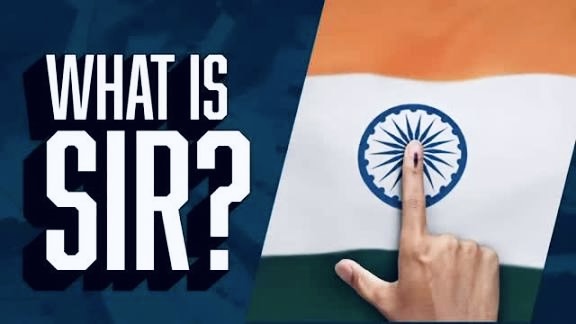
A debate erupted in India’s Parliament on the special intensive revision (SIR) electoral roll in Bengal. It simply means the special intensive revision of the electoral rolls undertaken by the Election Commission of India. It is a very thorough and elaborate voter list verification and revision process whereby no eligible voter should be left out, nor any ineligible person be included in the electoral roll process. The SIR is taking place in 9 States and 3 UTs, and is one of the biggest revisions of the country’s electoral roll in decades, due to frequent migration, non-removal of dead voters, and wrongful inclusion of any foreigners. The last SIR was done more than 21 years back in 2002-2004. However, the process of revision of electoral roll was called into question due to several criticisms from the opposition party and independent researchers etc.
In the recent case of Association for Democratic Reforms & Ors. v. Election Commission of India, while hearing the plea challenging the Election Commission’s decision to conduct a Special Intensive Revision of electoral rolls, the Supreme Court raised the concern about the transparency and integrity by stating that “can the ECI adopt an inquisitorial approach to determine whether a person is a citizen by requesting documents? or is the ECI’s power of supervision limited to verifying the age and residence of an elector?”
Beyond the political crossfire, the revision process was plagued by various systemic hurdles; including documentation barriers like the existing voters standard ID proof (Aadhaar, ration cards) are often rejected, and voters enrolled after 2003 have to submit fresh enumeration forms along with citizenship documents (e.g., birth certificate, parentage proof). Moreover, a punishing six-week timeline has put a heavy burden on 5 lakh Booth Level Officers (BLOs) covering over 510 million people across 9 states & 3 UTs. This leaves little room for due diligence, and the exhaustion felt by BLOs isn’t just a minor administrative hurdle; it’s a direct threat to our democracy.
Concept of Delimitation
The word “Delimitation” literally means the act or process of fixing the limits or boundaries of territorial constituencies in a country. To fix these boundaries, the first Delimitation Commission was established in 1952 under the Delimitation Commission Act, 1952, following the 1951 Census, which fixed the number of Lok Sabha seats at 494. Subsequent commissions were formed in 1963 & 1973 under the following Delimitation Commission Acts, 1962 & 1972, which fixed the no. of seats in Lok Sabha at 522 & 543.
The delimitation commissions have not formed after 1981, 1991, and 2011 Censuses due to a constitutional freeze implemented to promote population control measures. The 42nd Constitutional Amendment Act, 1976, imposed a freeze until the year 2001, and the 84th Constitutional Amendment Act, 2001, extended this freeze till 2026. Thus, the number of Lok Sabha seats has remained fixed at 543 based on the 1971 Census data.
Redrawing delimitation implies the process of defining the boundaries of territorial constituencies and fixing the allocation of electoral seats in the Lok Sabha and State Legislative Assemblies. An effective democracy ensures that political representatives freely represent the interests of the people in national politics. To achieve this, territorial constituencies must be adjusted so that each voter represents a uniform value in the House of the People.
Constitutional Provisions Related to Delimitation
The Indian Constitution provides the following provisions related to Delimitation:
● Article 81 deals with the composition of representatives of Lok Sabha which provides that Lok Sabha shall not consist of more than 550 members (530 from states , 20 from UTs) directly elected by the people from territorial constituencies of states and union territories.
● Article 82 empowers parliament to enact a Delimitation Act after every census for the purpose of readjusting electoral seats, which enables equal representation based on population changes.
● Article 170 is concerned with the composition of State Legislative Assemblies based on population, further maintaining the principle of “one person, one vote, one value”. Together, these provisions consistently emphasize the population-based changes in the electoral boundary system.
In a way, our future is a reflection of our present. If we cannot fix the voter list today, we cannot hope for a fair democratic boundary tomorrow. If we work with a flawed voter list now, the process of redrawing our political map will be compromised from the start. Today’s voter list must be seen as a complementary tool for conducting the vital process of delimitation after every census. Relying on the population criterion alone is insufficient; it requires the BLO’s notebook, which is a vital instrument to effectively distribute the ‘democratic share’ to the people of India.
North-South Conflict and the Impending Crisis
The Southern States have accepted the national policy of managing population. Nonetheless, they are currently confronted with a contradictory consequence: if boundaries are established solely based on population size, they will experience a reduction in their share of proportional representation, jeopardizing the democratic principle of equitable representation as seen in a (study by K. Murugan in Asian Journal of Economics suggests fiscal disparity in tax devolution between north-south in the 15th Finance Commission report).
Southern states are concerned that their progress is being weaponized against them. On the other hand, the northern states benefit disproportionately from increased population and the policy making center has been mostly located in the northern states. This has brought the sense of exclusion in terms of specific socio-economic needs of southern states. This demographic division has created a sense of federal friction between the North and the South. However, this division can be addressed through appropriate measures so that every constituency receives equal representation. This can be achieved by balancing Lok Sabha representation, increasing the number of seats, and strengthening the Rajya Sabha’s role by giving it greater authority over financial and federal legislation to protect the interests of states that have achieved demographic stability. Such a balance of power would help secure federal harmony, similar to the system in the United States. Adopting a hybrid formula—one that considers both population and performance—would reduce the conflict between the North and the South
The inequity and ineffectiveness of our electoral system — whether in fairness, clarity, or the role of the Supreme Court — raise serious questions about the integrity of our autonomous institutions. Here, procedure clashes with substance. The real threat to democracy is not shifting boundaries but the erosion of public trust. Allowing a flawed Special Intensive Revision (SIR) to serve as the basis for the 2026 delimitation would undermine the formation of a morally upright Parliament. In a diverse country like India, representation is the most important factor that stabilizes the federal system. If we weaken that relationship through apathetic or discriminatory bureaucracy instead of strengthening it, our democratic future will be divided rather than united.