
Passive Euthanasia is legal in the case of Harish Rana Decree by the Supreme Court: Legal Analysis.
Introduction
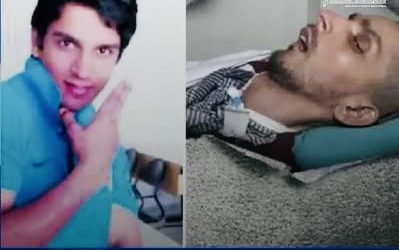
The Supreme Court of India has just permitted passive euthanasia in a landmark case of Harish Rana a 32 year oldman who had been in permanent vegetative state more than 13 years since a severe brain injury, and was in a permanent vegetative state. The decision contains the first practical judicial application of the passive euthanasia paradigm identified before the Court.
Background of the Case
Harish Rana experienced a traumatic head injury in 2013 that occurred due to the fourth floor fall of a building. The crash put him in an irreversible vegetative state in which he was utterly paralyzed and on artificial life support, even with nutrition administered by a tube. In the period of over ten years, medical checkups were constant to confirm that his health was not getting any better and recovery was near impossible.
His father later went to the Supreme Court to request that the court could allow him to withdraw the life-sustaining treatment. Based on medical documentation and opinions expressed by experts a bench of Justices J. B. Pardiwala and K. V. Viswanathan permitted withdrawal of medical treatment since the bench felt that further maintenance of life under medical assistance was not therapeutic but merely an extension of biological life.
Constitutional Foundation: Right to die with Dignity
This ruling is based on the 21st article of the Constitution of India that states the right to life and personal liberty. This has been construed over the years by the Supreme Court to have meant the right to die with dignity especially in instances of terminal diseases or other medical conditions.
The case Common Cause v. Union of India was the first to recognise this principle., the Court legalized passive euthanasia with stringent protection and also acknowledged the validity of living wills or advance medical directives. The decision of Harish Rana is the first practical application of such a legal framework in a particular instance.
Critical Judicial Discoveries of the Court
The Court made some important clarifications regarding the following legal principles:-
Clinically Assisted Nutrition (CAN) is a type of medical treatment and thus can be terminated by the medical boards assessing that further treatment is not viable.
Primary and secondary medical boards comprising of qualified specialists should recommend withdrawal of life support.
When the medical boards have approved the withdrawal then there would be no need of court intervention, but the withdrawal is supposed to be documented in the presence of a judicial magistrate.
Another recommendation that was made by the Court to High Courts and state authorities was to make sure that end-of-life decision-making procedures be accomplished without any difficulties with the help of hospital procedures and medical oversight mechanisms.
Ethics and Legal Significance
This decision is an important milestone in the development of euthanasia law in India. It recognizes that medical technology is not to be applied to simply extend the life span of a person whose recovery will never be achieved and whose suffering will be made as long as possible. Simultaneously, the Court underlined serious procedural precautions to avoid abuse
There is also the need to have extensive legislation to control end of life care, palliative care and even patient autonomy as noted in the case. This bench itself recommended the Union government to contemplate in the establishment of a comprehensive statutory framework with regard to euthanasia and end of life decisions.
The ruling of the Supreme Court in the case involving Harish Rana is a milestone in the Indian constitutional law. Allowing passive euthanasia in a factual scenario, the Court has created more authority to the fact that dignity is a crucial element of the right to life. The decision, which gives relief to the family of such cases, as well as adds credibility to the legal obligation of India to offer humane and ethical end-of-life treatment.
Conclusion