

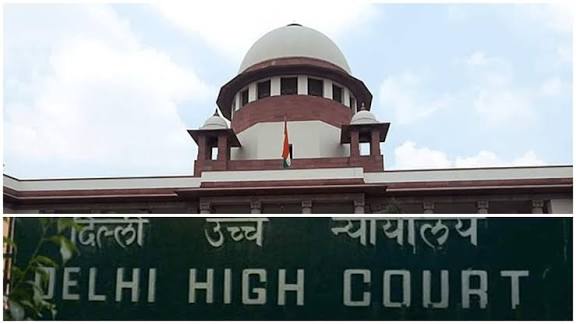
Delhi High Court Stays State Fee Regulation of the private schools.
Introduction
The Delhi High Court has temporarily blocked the action of a State Government order to regulate the fees charged by private unaided schools in the National Capital Territory of Delhi. Associations of the private schools challenged the order based on the position that the government directive was tantamount to over-interference of the executive in the autonomy of the private educational institutions.
Background of the Dispute
The challenged order was made by the education department in the Government of Delhi and was aimed at putting limitations on the fee hiking and also demanded schools to seek consent first before altering their fee system. The State explained the action by the necessity to secure parents against arbitrary and excessive increases of fees, in particular, in the economic conditions after the pandemic. But, the schools of higher learning argued that blanket regulation contravened both state and federal guarantees.
Constitutional and Statutory Framework
The case mostly involves the application of Article 19(1)(g) of the Constitution of India which states that the freedom of practising any profession or conducting any occupation, trade, or business. Even though education is not considered a purely commercial activity, the private unaided schools have a right to receive reasonable autonomy in administration. Any limitation made by the State must hence meet the reasonableness test as provided in Article 19(6).
The schools were also being based on landmark Supreme Court rulings like T.M.A. Pai Foundation v. State of Karnataka and Modern School v. Union of India, in which the Court acknowledged that even though profiteering is inadmissible, independent institutions at the non-governmental level have the right to set their charge system, provided that it is controlled by a regulatory board that is open and non-random.
Grounds for Grant of Stay
The interim relief was granted, but the Delhi High Court noted that the State order seemed to jump over the statutory mechanism that was already in place as per the Delhi School Education Act and Rules. The Court observed that the executive instructions have no power to supersede the legislation or the judicial precedents. It also determined that there was a prima facie case being presented because enforcing the order immediately would lead to permanent damage to the budgetary and operations of the private schools.
Finding a balance between Public Interest and Institutional Autonomy.
Conventionally, in the constitutional context, the case brings out the fine line between the right to education in the Article 21A and the autonomy of the private education institutions. Although the State does have a valid interest in affordability and anti-exploitation, these concerns should be met by legal means and commensurate regulation.
Conclusion
The interim stay provided by the Delhi High Court does not determine the legality of regulating fees but highlights the need to have due process and constitutional restrictions on the authority of the executive. The ultimate ruling will be vital to the extent to which the State can go when regulating the fees of the private schools without violating the institutional autonomy and the developed constitutional norms.