

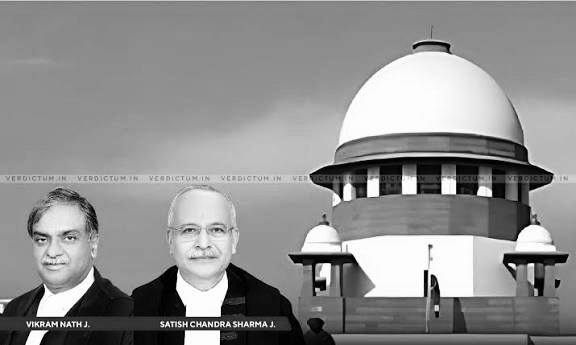
Supreme Court Refuses To Direct Disclosure Of Opposition Leader’s Dissent Regarding CIC Appointments
Introduction
Recently, the Supreme Court of India refused to order the release of a dissent note of the Leader of the opposition in appointing the Central Information Commissioner (CIC). The decision raises important constitutional issues–transparency, separation of power, institutional confidentiality, and the extent of judicial review of high level appointments.
Background
The right to information Act, 2005 regulates the appointment of the Central Information Commission. The Central Information Commissioner and the Information Commissioners are nominated by the President upon the recommendation of a high-powered committee which includes the Prime Minister (Chairperson), the Leader of the Opposition in the Lok Sabha and a Union Cabinet Minister nominated by the Prime Minister under Section 12 of the Act.
In the current scandal, there was a request that would lead to revelation of the dissent which was aired by the Leader of Opposition when it came to selecting the candidates. The rationale that was put forward was based on transparency and the spirit of RTI Act and argued that citizens ought to know the deliberative stance of constitutional functionalities in appointments.
The Supreme Court, however, declined to give directions, requiring such disclosure.
Constitutional and Legal Aspects.
The case lies at the borderline of transparency and institutional autonomy. Article 19(1)(a) of the Constitution is moved into practice through the Right to Information Act under which the right to information has been legally accepted as a part of the freedom of speech and expression. Public appointments result in greater democratic accountability and strengthen participatory governance through transparency.
Article 19(1) (a) is however not absolute. The article 19(2) imposes reasonable restrictions with some consideration on the general order of the population, decency, and interests of the State. Although the current case is not a direct appeal to these grounds, it brings in a more general constitutional principle: is deliberative confidentiality in high-level selection committees required to have constitutionally important offices effectively discharged?
The fact that the Supreme Court did not instruct disclosure is an indication of judicial restraint in regard to the honesty of the selection procedure. The Court does seem to have acknowledged that open discussions including dissent, are a part of the decision-making process. Forcing dissent to come out might suppress open deliberation and influence effectiveness of institutions.
Separation of Powers and Judicial restraint.
The other important one is the doctrine of separation of powers. CIC appointment is an executive role, which is carried out under the statutory procedure. In these cases, the judicial review is usually restricted to reviewing illegality, arbitrariness, mala fides, or a breach of constitutional directives.
In refusing to order disclosure, the Court reaffirmated its general rule that it will not generally interfere with internal operations of a statutory selection committee unless there is any obvious evidence of procedural inadvisability or constitutional weakness. Judicial restraint maintains the functional independence of other state organs.
Transparency and confidentiality
The ruling shows that there is a pattern of tension of constitutions transparency versus secrecy. As much as transparency promotes trust in people, some elements of decision-making especially deliberative views and dissent could be shielded in order to enable uninhibited deliberation.
There are exceptions to disclosure given in section 8 of the RTI Act in particular cases such as information that is likely to hamper the investigative proceedings or cabinet documents such as deliberation records. CIC appointments are not necessarily cabinet decisions, but the reasoning of safeguarding deliberative processes has been recognised judicially in a number of situations.
Conclusion
The non-rigid nature of the balance between openness and institutional integrity is emphasized by the fact that the Supreme Court did not order to disclose the dissent of the Opposition Leader. Although transparency is a fundamental value of democracy, the Court has apparently realized the necessity to guard the deliberative space of legislative appointment agencies.
The decision, therefore, supports two fundamental principles of the Constitution the restricted nature of judicial review over executive appointments and the careful balancing between the right to information and the maintenance of candid institutional decision-making.