
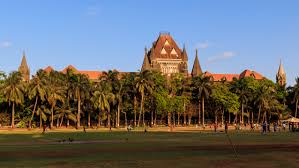
ILS Pune law students move Bombay High Court after being barred from exams for attendance shortage
Indian Law Society (ILS) Law College, Pune students had recently moved to the Bombay High Court over not being allowed to take their semester exams because of lack of attendance. The petition poses critical issues concerning the right to academic discipline in relation to the rights of students in professional legal training.
The petitioners argued that the mean attendance rules, which were usually set to 75 (according to the Bar Council of India (BCI) norms) were applied without sufficient attention to unusual circumstances. Health problems, moot court activities, internship and other educational activities were cited by many students as reasons why they failed to meet the attendance requirements.
They claimed that withholding the means of conducting examinations against them is an unwarranted limitation on their right to education, which derives out of Article 21 of the Constitution of India.In response, the college administration justified its move by highlighting that attendance policies are compulsory and they are based on the principle of academic rigor and professionalism.
The BCI Rules on Legal Education require attendance to appear in the examinations, which means that law graduates have enough classroom experience. The school claimed that the loosening of these standards would open a precedent that would weaken discipline and equity among students who attended school according to the conditions.When considering the case, the High Court questioned the issue of whether attendance rules were arbitrarily applied or unreasonable. Courts dealing with similar cases have tended not to interfere with academic policy, except where found to be overtly arbitrary, discriminatory, or to violate fundamental rights.
The courts have always appreciated the independence of learning institutions, with constitutional restrictions.The petition, however, also emphasizes the changing reality of legal education with experiential learning taking a significant part, i.e. internship and competitions. Strict enforcement of the norms of attendance could be reevaluated to consider modern pedagogical practices. The Court can consider the possibility of institutions having a more flexible approach and still not violate academic standards.The decision in this case may have far-reaching consequences on the law colleges in India.
The court decision in favor of the students can help to persuade the institutions to include flexibility in the attendance policies, but a decision supporting the position of the college would help to enforce a strict adherence to the norms.Finally, the case highlights the necessity of finding the compromise between institutional discipline and the comprehensive growth of law students so that legal education would be both disciplined and flexible to contemporary requirements.