Raghav Chadha Row: Merger or Defection under Indian Constitution
Introduction
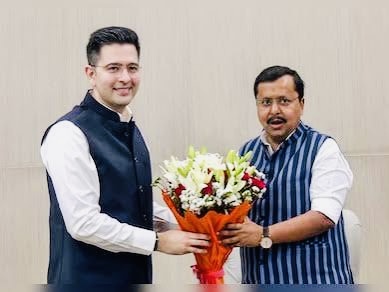
The defection saga of Raghav Chadha has once again raised the question of the operations of the anti-defection law. This case raises the important constitutional question of whether the actions are a constitutional “merger” or in violation of the anti-defection law. This question is perhaps not just political, but also constitutional and moral, and has ramifications for the stability of the legislative house.
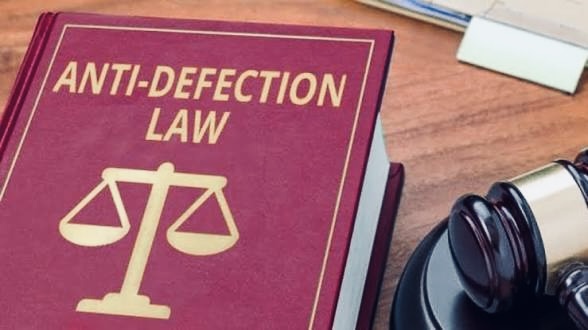
Anti-Defection Law
The anti-defection law, entrenched in the Tenth Schedule of the Constitution of India, was enacted in 1985 to put an end to the evil of political defections. It makes members of Parliament or state legislatures liable to disqualification if they:
• Voluntarily resign from their political party, or
• Vote or abstain inconsistent with the directions of their political party (whip).
The purpose of the law is to promote party discipline and to prohibit “political defections”.
The Exception of Merger
But the Tenth Schedule provides for an exception in the case of a merger under Paragraph 4:
A merger is effective in respect of at least two-thirds of the members of a legislative party if they agree to merge with another political party. These members are safeguarded against disqualification..
The aim of this exclusion is to differentiate defection by individual members from a valid political regrouping..
The Legal Issue
For the purposes of the Raghav Chadha case, the crucial question is whether Raghav Chadha (and/or his party) fulfils the conditions of a merger or constitutes defection. In the absence of formal merger backed by the two-thirds majority, the immunity under Paragraph 4 cannot apply. Even without a formal resignation, actions that signal a departure from party politics and/or joining another political party might be construed as a “voluntary resignation.” This greatly expands the disqualification grounds.
Judicial Interpretation
The Indian Supreme Court has also been instrumental in the development of anti-defection law. In Kihoto Hollohan v. Zachillhu (1992), it upheld the constitutionality of the Tenth Schedule, and permitted judicial scrutiny of the Speaker or Chairman’s decisions. In Ravi S. Naik v. Union of India(1994), it ruled that there is no requirement for formal resignation, and that “voluntarily giving up membership” can be established by conduct. These decisions suggest indirect actions -such as statements, alliances, or political conduct – can lead to disqualification.
Presiding Officer’s Role
The power to disqualify is with The Rajya Sabha Chairman or The Speaker of the Legislative Assembly. In the case ofRaghav Chadha, being an MP of Rajya Sabha, the Chairman is critical. But these decisions are not binding and subject to challenge in the constitutional courts.
Broader Implications
This case raises a number of concerns the integration of Politics and Law:
• Political tactics may test the boundaries of constitutional practices.
• Risk of Abuse: The anti-defection law can be used against political dissidents.
• Need for Reform: The existence of the law has long been debated – does it curtail legitimate dissent?
• Presiding Officer’s Impartiality: Adjudicator’s neutrality is vital for fairness
Conclusion
The Raghav Chadha case exemplifies the demographic power struggle of politics and the constitutional content of the parliamentary system. Whether a merger or defection is legitimate is governed by numbers, intention and acts. Failing a clear case of two-thirds merger, the actions which imply a departure from party loyalty are likely to fall under the purview of disqualification under the anti-defection law. The decision in this instance will rest in the interpretation of the competent authority and, if challenged, in the courts. in a healthy democracy such as India, the anti-defection law both provides protection against instability and limits political liberty. The problem is striking a balance where it needs to be applied for the benefit of the democratic process and not for its determention.