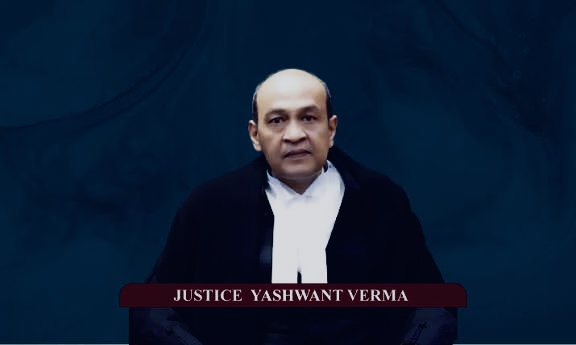
Supreme Court declines to stop investigation against Justice Yashwant Varma: A significant moment in judicial accountability
Introduction
In a significant constitutional development in January 2026, the Supreme Court of India decisively dismissed a petition filed by Justice Yashwant Varma of the Allahabad High Court to halt the parliamentary inquiry and impeachment proceedings initiated against him. The Court ruled that the procedures outlined in the Judges (Inquiry) Act, 1968 had been followed correctly and that the judge had not demonstrated any infringement of fundamental rights that would justify judicial intervention at this point.
This incident has become a highly scrutinized judicial accountability issue, raising concerns about judicial independence, accountability, statutory interpretation, and parliamentary supervision.
Background of the case
The controversy began on March 14, 2025, when a fire erupted at the official residence of Justice Varma in New Delhi. During the firefighting efforts, authorities discovered significant amounts of burnt and partially burnt currency notes in a storage room. This incident led to a broader investigation, with the Supreme Court collegium, headed by the Chief Justice of India, transferring Justice Varma to the Allahabad High Court and setting up an in-house panel to look into the matter.
The in-house committee, comprised of judges, conducted a thorough investigation, including interviews with witnesses and on-site inspections. They confirmed the presence of cash in the judicial residence and recommended the initiation of removal proceedings.
Subsequently, motions for Justice Varma’s removal from office were presented in both Houses of Parliament, initiating the impeachment process under the Judges (Inquiry) Act, 1968. A three-member inquiry committee, appointed by the Lok Sabha Speaker, was established to investigate the allegations.
Justice Varma’s legal challenge
Justice Varma challenged the validity of the parliamentary inquiry mechanism in the Supreme Court. He argued that the constitution of the inquiry committee was procedurally flawed as per his interpretation of Section 3(2) of the Judges (Inquiry) Act, 1968. According to him, a joint committee could only be formed after both Houses of Parliament had admitted the motion for his removal.
He argued the following:
• The Lok Sabha Speaker unilaterally constituted the committee despite procedural irregularities.
• The failure of the Rajya Sabha to admit the motion—especially due to leadership changes in the Upper House—made the committee invalid.
• These flaws infringed upon his constitutional rights, including the right to equality and fair procedure.
Rulings of the Supreme Court
The petition was dismissed by Justices Dipankar Datta and S.C. Sharma. The Court’s decision highlighted the importance of statutory interpretation and the separation of powers.
1. The Court ruled that there was no violation of the statutory process. It clarified that the Speaker could form the inquiry committee once a valid motion was admitted in one House, and simultaneous admission by both Houses was not mandatory under the Act. The Court emphasized that the constitutional safeguards should not hinder legitimate statutory processes.
2. Justice Varma did not show any violation of fundamental rights. The Court reiterated that petitions under Article 32 should not interfere with ongoing statutory procedures unless there is a clear violation of fundamental rights. Without such evidence, there was no justification for judicial intervention.
3. The Supreme Court stressed the importance of separation of powers and parliamentary oversight. It stated that the parliamentary mechanism for judicial removal is a constitutional function of the legislature, and judicial interference at this stage would disrupt the balance of power. The Court advised that challenges to procedural provisions should be raised at the appropriate time and not used to obstruct parliamentary accountability mechanisms.
Current development of the case
As of mid-January 2026, the inquiry panel is still ongoing, and Additional Solicitor General Raja Thakare has been assigned to support the Lok Sabha inquiry committee, indicating Parliament’s commitment to addressing the issue.
At the same time, Justice Varma has been defending himself before the parliamentary panel, raising concerns about specific aspects of the evidence related to the cash discovery.
Significance of this matter
1. Balancing Judicial Independence and Accountability
Judicial independence is a fundamental aspect of a constitutional democracy, safeguarding judges from undue influence. However, it is essential to recognize that accountability mechanisms, such as impeachment, play a crucial role in addressing misconduct and incapacity. This case underscores the importance of maintaining a balance between independence and accountability.
2. Interpretation of the Judges (Inquiry) Act, 1968
The Court’s interpretation of Section 3(2) establishes a precedent for resolving procedural uncertainties in the Act in a manner that promotes efficiency and effectiveness. By focusing on the legislative intent of enabling removal proceedings when necessary, the Court ensures that the Act is not used as a tool for judicial obstruction.
3. Upholding Procedural Safeguards and Fairness in Proceedings
While the Supreme Court did not intervene to stop the proceedings, it emphasized the importance of conducting future stages, such as the inquiry committee report and Parliament’s vote, with adherence to due process. Ensuring formal opportunities for a fair hearing and the right to a defense is essential to uphold the principles of justice.
Conclusion
The Supreme Court’s decision not to stop the investigation into Justice Yashwant Varma highlights the importance of judicial independence within the constitutional framework, which also emphasizes accountability and compliance with statutory procedures. The ongoing parliamentary inquiry and its final resolution will have a significant impact on Indian legal history.