
The Legal aspects of the Aravallis
Introduction
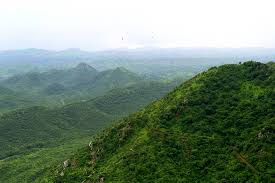
The Aravalli range, one of the oldest mountain systems in the world, spans across Gujarat, Rajasthan, Haryana, and Delhi. In addition to its geological age, the Aravallis play a vital ecological role by acting as a natural barrier against desertification, replenishing groundwater, regulating climate, and serving as the green lungs of the National Capital Region (NCR). Despite their importance, the Aravallis have been subject to decades of degradation from extensive mining, deforestation, and uncontrolled urban expansion. This environmental crisis has led to ongoing legal intervention, making the “Aravalli matter” a significant case in India’s environmental law.
Background of the case
The Aravalli issue did not arise from a single dispute but developed over a series of legal cases starting in the 1990s. Extensive mining of stone, marble, and silica, along with real estate projects, caused significant harm to forest cover and groundwater resources. Lack of action by authorities and weakening of environmental protections by state governments led to public interest lawsuits, notably by environmental lawyer M.C. Mehta, resulting in ongoing judicial oversight.
Judicial intervention case laws
The most significant developments stem from M.C. Mehta v. Union of India, known as the Aravalli mining case. Through a series of orders, the Supreme Court enforced a complete ban on mining in designated forest areas of the Aravallis and required prior environmental clearances for mining activities. The Court went beyond formal designations and instructed authorities to identify areas exhibiting forest characteristics, regardless of official records. This approach ensured that ecological considerations took precedence over bureaucratic designations.
Another key aspect of the Aravalli legal framework is T.N. Godavarman Thirumulpad v. Union of India, where the Supreme Court broadened the definition of “forest” to encompass all areas meeting forest criteria, irrespective of ownership or categorization. This interpretation brought a significant portion of the Aravalli range under the protective scope of the Forest (Conservation) Act, 1980, curtailing state discretion to allocate land for non-forest purposes.
Further bolstering the legal foundation, the Common Cause v. Union of India (2017) case established that mining without environmental clearance is unlawful and that retroactive approvals contravene constitutional principles. This decision directly impacted mining activities in the Aravalli region, many of which were operating without the required clearances.
1. M.C. Mehta v. Union of India (Aravalli Mining Case)
Court: Supreme Court
Period: Ongoing since mid-1990s
Key Orders:
• Complete ban on mining in notified Aravalli forestareas
• Mandatory Environmental Clearance (EC) for mining leases
• Direction to identify “forest-like areas”, even if not officially notified
• This case forms the backbone of Aravalli jurisprudence.
2. T.N. Godavarman Thirumulpad v. Union of India
Relevance to Aravallis:
• Expanded definition of “forest” beyond official records
• Aravalli areas with forest characteristics were brought under Forest (Conservation) Act, 1980
• States could not escape protection by mere revenue classification.
3. Common Cause v. Union of India (2017)
Issue: Illegal mining
Held:
• Mining without EC is illegal
• Retrospective ECs are unconstitutional
• Used to strike down mining operations in Aravalli regions.
Statuary frameworks in play
Various environmental laws regulate the protection of the Aravallis. The Forest (Conservation) Act, 1980 mandates central approval for any forest land diversion, thereby limiting mining and construction activities. The Environment (Protection) Act, 1986 grants the central government authority to issue enforceable directives to prevent environmental harm. Furthermore, the Environment Impact Assessment (EIA)Notification necessitates environmental clearance prior to undertaking mining and construction projects, a stipulation consistently upheld by courts in Aravalli-related disputes. Certain parts of the range are also covered by the Wildlife Protection Act, 1972, as they function as wildlife corridors and eco-sensitive areas.
Constitutional Dimensions
The issue of the Aravalli is firmly based on constitutional principles. The Supreme Court has consistently connected environmental preservation with Article 21, acknowledging the right to a clean and healthy environment as a fundamental aspect of the right to life. Article 48A, a Directive Principle of State Policy, mandates the State to preserve forests and wildlife, while Article 51A(g) imposes a fundamental responsibility on citizens to protect the natural environment. Courts have interpreted these provisions in a cohesive manner to support significant judicial involvement.
Applied Environmental Doctrines
The Aravalli jurisprudence has been influenced by a number of key environmental principles. The Public Trust Doctrine asserts that natural resources are held in trust by the State and should not be exploited for private benefit. The Precautionary Principle calls for proactive measures to address environmental risks, even without full scientific certainty. Sustainable Development aims to harmonize economic progress with environmental conservation, and Inter-generational Equity stresses the responsibility to safeguard natural resources for future generations.
Role of States and NGT
State governments, especially in Haryana and Rajasthan, have been criticized by the judiciary for issuing notifications that weaken the definition of the Aravalli range or allow construction and mining activities. Courts have deemed such actions as abuses of power. The National Green Tribunal (NGT) has also played a crucial role by stopping illegal constructions, mandating land restoration, and imposing environmental compensation, thus serving as a vigilant watchdog.
Conclusion
The Aravalli case is a prime example of judicial environmental protection in India, showcasing the judiciary’s role in upholding ecological constitutionalism and environmental rule of law. Despite strong court rulings, illegal mining continues due to weak enforcement. The future of the Aravallis hinges on both judicial orders and political will for effective governance.